The Tlingit First People called Haines Deishu, which appropriately translated to “end of the trail.” The city was a quaint tourist and fishing village sitting on the Chilkoot Inlet amidst an area, which had a lot to offer visitors. The day we arrived, the weather was wet and cloudy; but over the following days, the weather improved and provided ideal conditions for a variety of pictures of main street and the harbor.


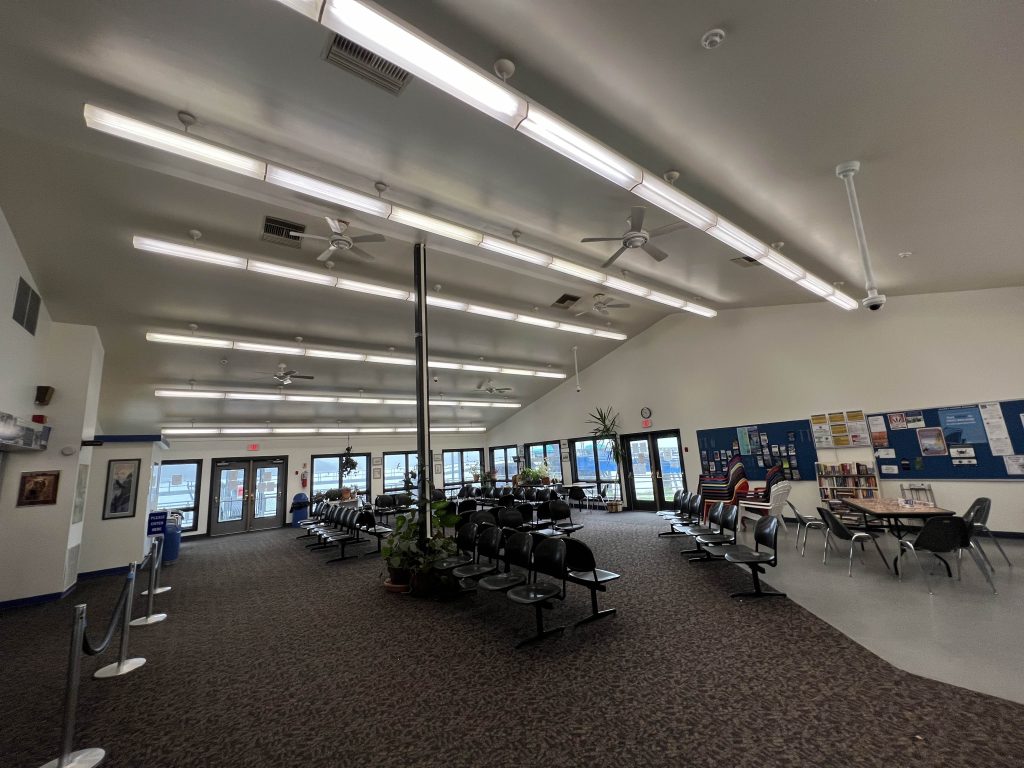
Our first order of business was to go to the AMHS (Alaska Marine Highway System) terminal several miles northeast from town. We thought we wanted to add a Haines to Skagway leg to our trip, but didn’t want to unload SidArthur in Skagway only to have to reload several hours later. Also, we had learned from our Valdez to Whittier sail, that the combined length of our vehicles was longer than what we reported when purchasing our tickets. The issue with this was the vehicle costs were based on length, and thus, we had unintentionally underpaid for our original tickets. Argh! The AMHS agent was extremely helpful; however, she wouldn’t be able to confirm our spot or update our additional costs until Monday (the day we departed), so we needed to return then. Sounded highly risky to us, but based on her experience, she assured us there would not be a problem. O…..kay, we’ll see you early Monday.


Second order of business was coffee. We found the Rusty Compass Coffeehouse about 1/3 mile from the campground on Main Street. We ate breakfast in Arthur, but the Rusty Compass had plenty of pastries and baked items to wash down with a great cup of joe. We became faithful regulars for the extent of our stay.
As we initially drove into Haines along the Chilkat River, we passed the Chilkat Eagle Preserve about 25 miles north of town. This 49,000-acre Preserve was created in 1982 to protect one of the largest concentrations of Bald Eagles in the world. Aproximately 400 bald eagles were considered residents, but from October through December, the population exploded to 3,500 as the eagles came to feast on the annual late run of chum salmon. We were too early for the Alaska Bald Eagle Festival held every November, but instead, we toured The ABEF (American Bald Eagle Foundation) museum facility located downtown. Their mission was conserving bald eagles and their habitat through education and stewardship. Their vision was inspiring and educating guests to foster appreciation and respect for maintaining a biodiverse natural world. We were more than willing to suppport them by paying the $25/person entrance fee. The museum focused on all of Alaska’s bird species, as well as, other indigenous wildlife. In 2010, ABEF added a live raptor center. The highlight for us was observing two rehabilitated bald eagles, both of whom will be protected within the center for the rest of their lives.


I couldn’t resist taking the MFI Moose picture. This photo illustrated how incredibly large Moose antlers were. Additionally, she tested her grip strength in comparison to that of North American raptors. I was inspired by her 36.7 Kg (81 psi) score; however, the grip of a Bald Eagle at 400 Kg (881.8 psi) was truly impressive.


An interesting part of Haines history, was the construction of Fort William H. Seward in 1902, so the Army could maintain order during the gold rush. The Fort was named to honor Secretary of State Seward, who of course negotiated the purchase of Alaska (Seward’s Folly) from Russia on March 30, 1867. During WW I, Fort Seward was a training center for Alaska draftees. It was renamed Chilkoot Barracks in 1922, to honor the Chilkoot First Nation People and the Chilkoot Trail, which was the major inland access route for early prospectors. In WW II, the Fort became a recruitment station, training center, and military rest stop before being deactivated in 1945 and purchased by the Port Chilkoot Company. This company was a joint venture by retired Army officers whom established projects on the property to assist veterans. The Fort was listed in 1972 on the National Register of Historic Places and declared a National Historic Landmark in 1978.
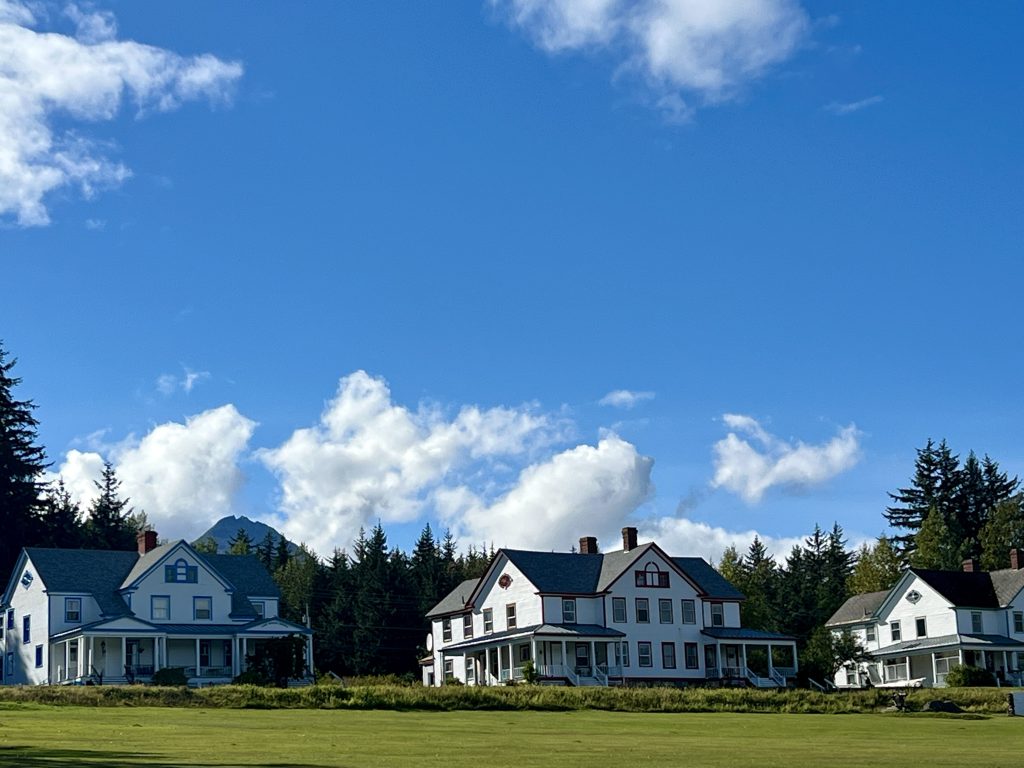
Today, the property has been developed into an art colony, some buildings have been sold as private residences, and others accommodate tourists, including a campground. The buildings surround a large open area known as the parade field with senior officer housing on one side and enlisted barracks on the other. This was the standard Army housing layout of the early 1900’s, which I had witnessed when stationed at Offutt, AFB, NE (originally Fort Crook) and Los Angeles AFB, CA (we lived on historic Fort MacArthur in military family housing). Admittedly, I got nostalgic!


We planned on eating dinner at the Commander’s Room Restaurant, part of the Hotel Halingsland on the historic property. However, when I went inside to make reservations, no one was on duty and the place smelled moldy. We learned subsequently that the restaurant was closed for the season. We drove around the property, saw no tourist activity, and got the feeling everything there was closed for the season.
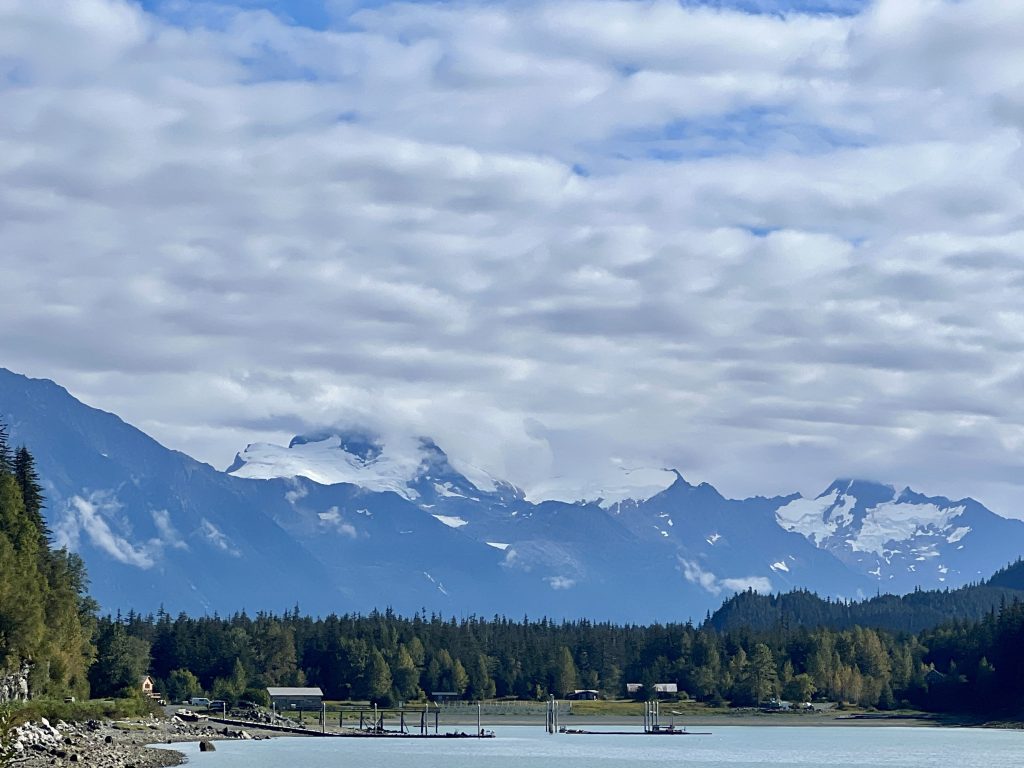
We crossed the peninsula from Chilkoot Inlet to Chilkat Inlet and got on Mud Bay Road, which took us south to Chilkat State Park. We entered the state park (very steep and eroded dirt road), visited its campground, and took pictures from the Day Use Area. We got back on Mud Bay Road and drove until it dead ended at a private residence. The scenery was spectacular with mountains, rivers, and even Davidson Glacier (likely our last one for the year). We were just chilling, driving around to see what the area offered tourists.


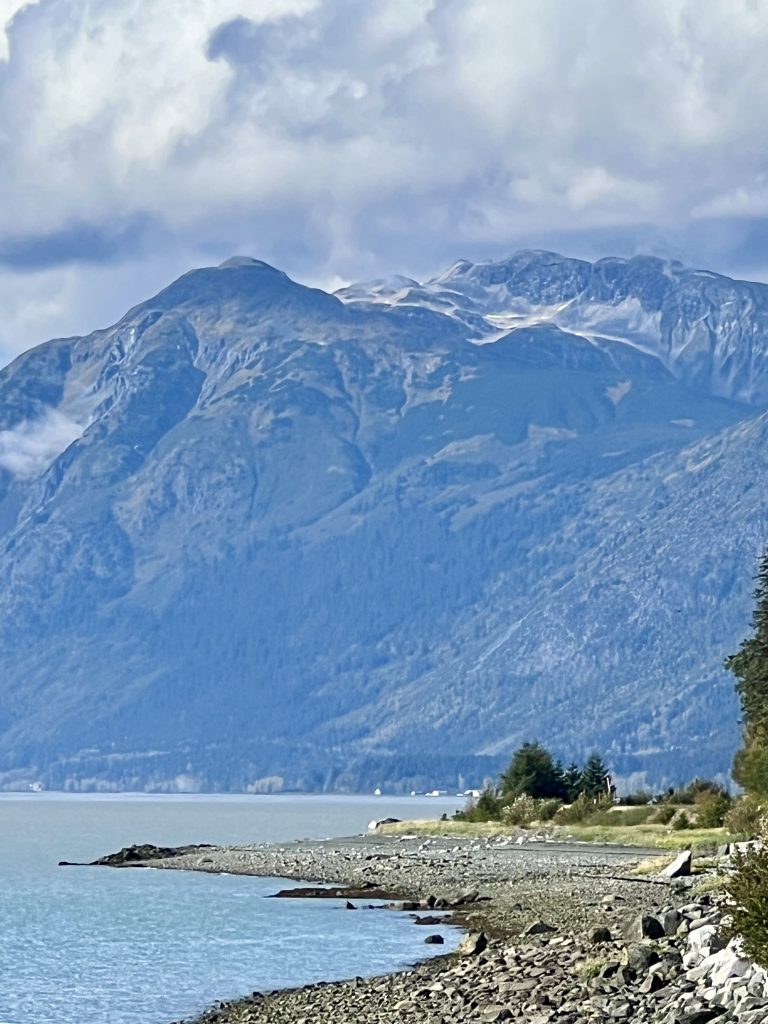
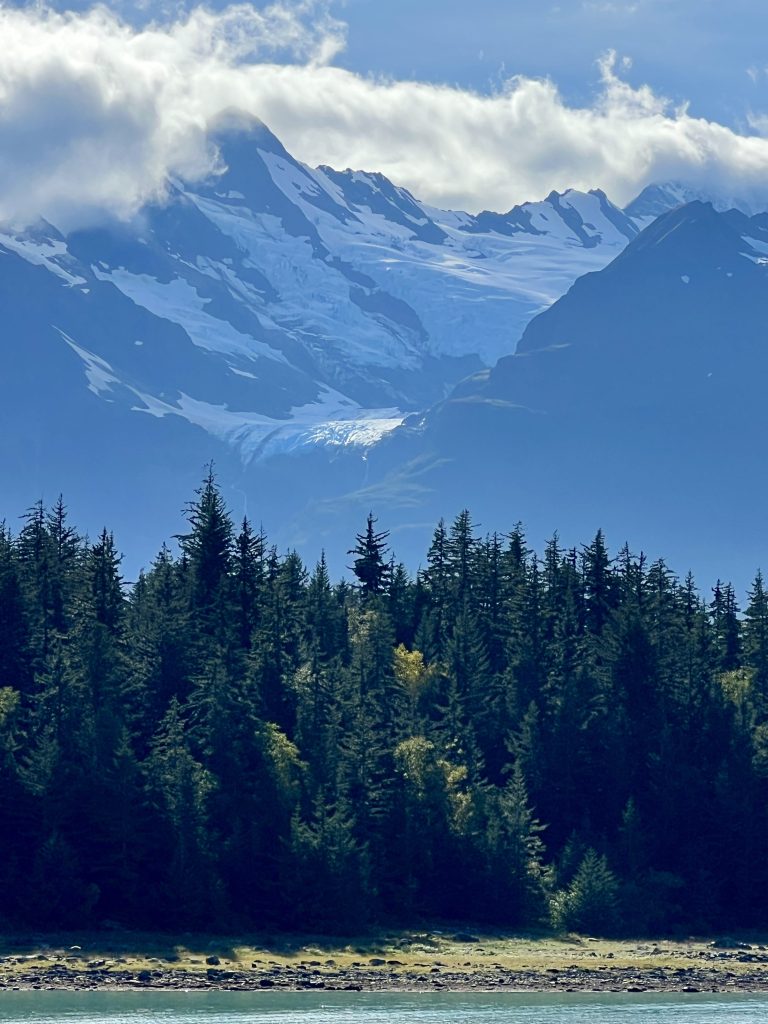


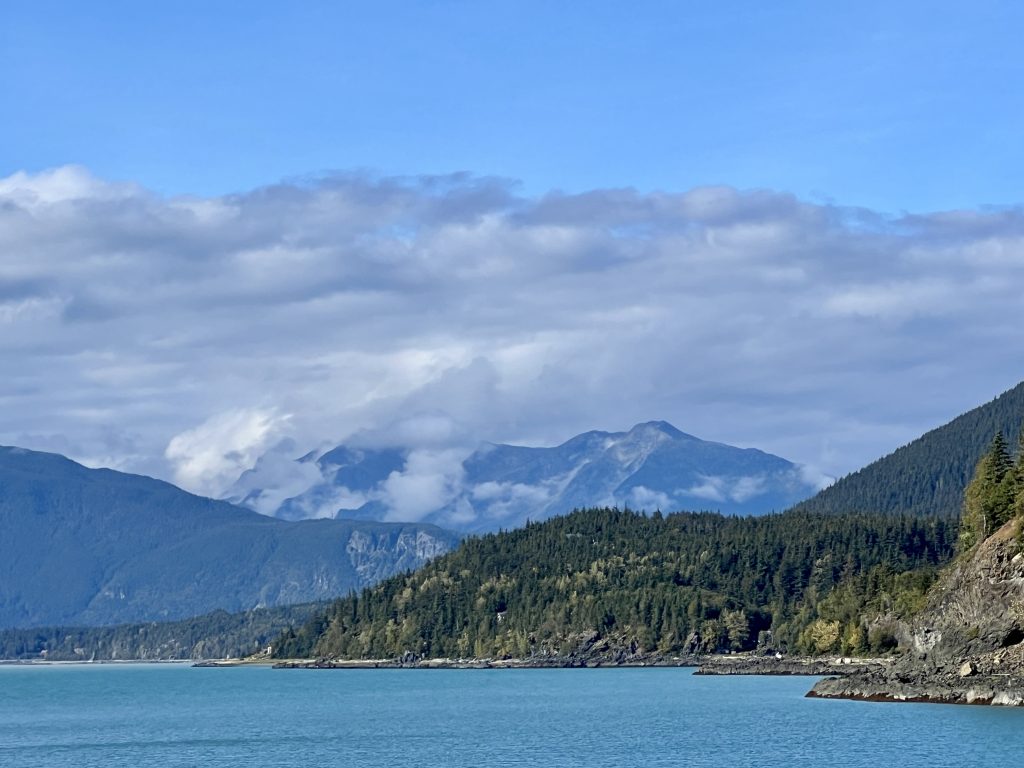


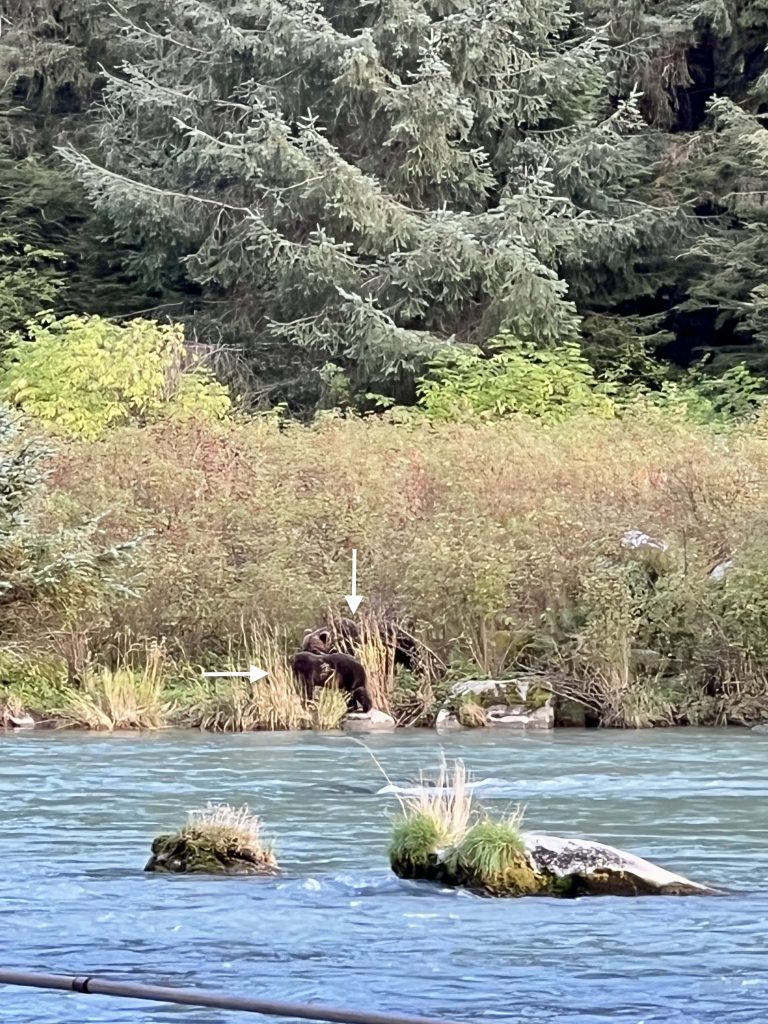
The AMHS agent we spoke with the day after arriving, assured us that we would see grizzly bears along the Chilkoot River between the north end of Lutak Inlet and Chilkoot Lake. It wasn’t until our third trip up to the lake that her assurances rang true. The drive on Lutak Road wasn’t far, and the views were pleasant, so we didn’t mind repeating it three days in a row.


Lutak Road, especially where it paralleled the river, was lined with a fair number of tourists whom also wanted to see bears. The limited parking was either restricted for tour buses or already occupied. We commented to each other how annoyingly crowded the road must be at the height of tourist season. Once I saw bears, I started taking pictures; however, I quickly realized videos were the better method. This was the best I could do from a distance of about 150 yards. Fortunately, what our eyes saw was spellbinding, at least for me.


We’d had a very busy day and decided to treat oursleves by eating out. We chose the Bamboo Room & Pioneer Bar, advertised as having a regionally famous halibut fish & chips meal. Made ordering easy. Unknowingly, we entered through the smoke-filled bar side and met the “who-are-you” gaze of locals wondering if we were lost. They loudly directed us to the doorway to the restaurant. When first purchased by Marty Tengs in 1953, a bamboo curtain was all that separated the bar from the restaurant. Marty’s daughter Christy and her husband had owned the restaurant since 1991, but we noticed a “For Sale” sign hanging outside. The fish & chips were very good, however, the extremely thick breading wasn’t to our liking. We relaxed and enjoyed ourselves.

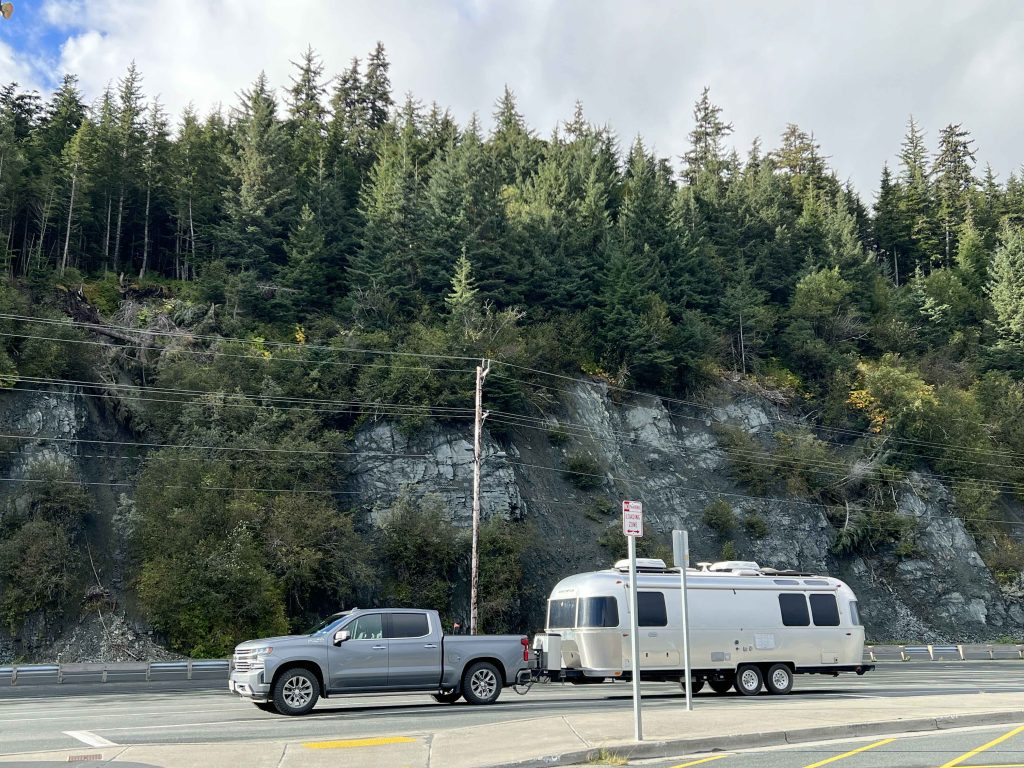
On 16 September, we packed and hooked up SidArthur and drove to the AMHS terminal to get measured and hopefully confirm the requested changes to our reservation. Once again, the AMHS agents proved to be highly reliable and extremely helpful. They confirmed our passage, got us the last roomette aboard, and it only cost us an additional $29. We were instructed to drop Arthur at the south end of the terminal parking lot and amuse ourselves until vehicle-lineup for boarding began around 4 pm. We were ready, and the MV Kennicott was scheduled to depart at 6 pm.
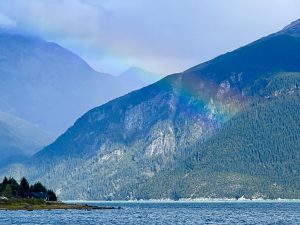
Saw this on our final drive out to the terminal from Haines. We took it as a sign that our impending 4-night sail to the lower 48 would be pleasant and uneventful.