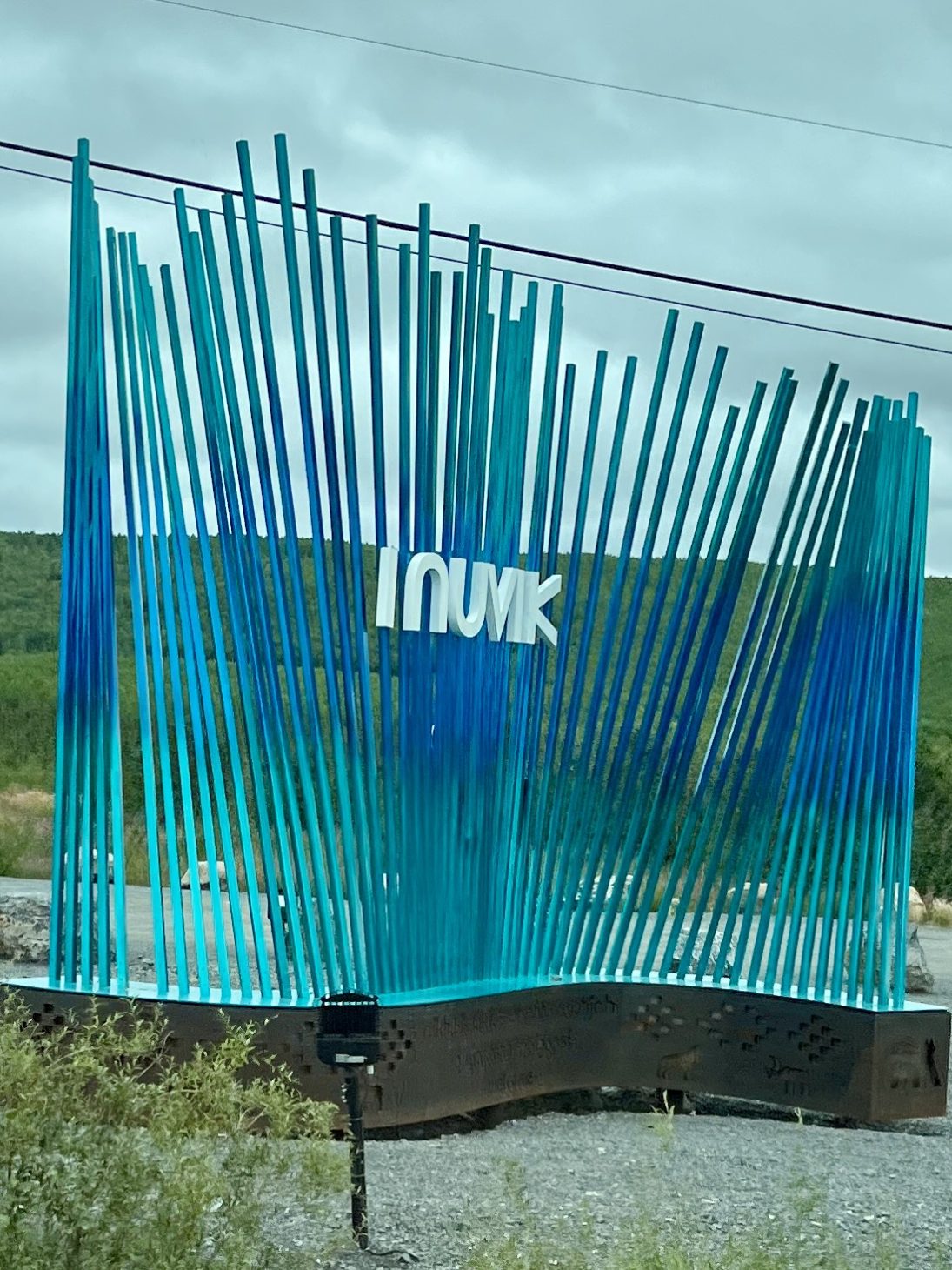
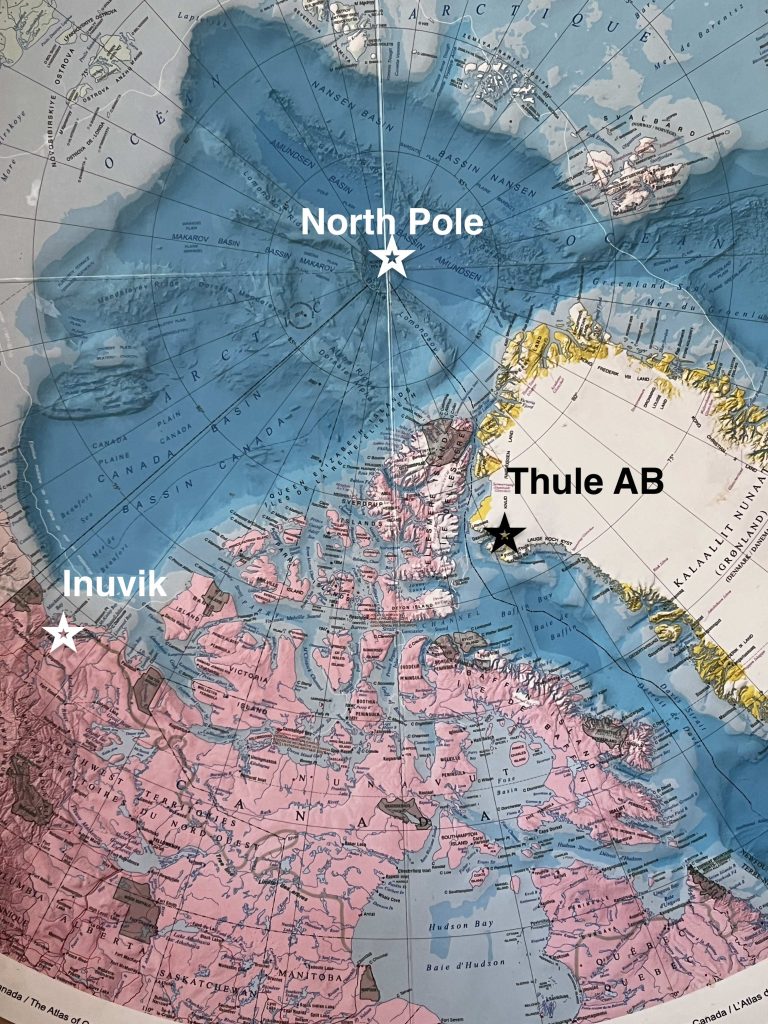
The Inuvik coordinates were 68°21’39″N and 133°43’47″W, which placed it 124 miles north of the Arctic Circle. I referenced this to make a comparison with my assignment at Thule Air Base, Greenland from Dec 17, 1976 to Dec 17, 1977. For accuracy, Thule was renamed Pituffik Space Base in 2023, since it had become a U.S. Space Force asset. The Thule Air Base coordinates were 76°31’52″N and 68°42’11″W, which put the base 750 miles north of the Arctic Circle, yet still 947 miles from the North Pole. Inuvik was very far north for sure; however, I’d been farther north. The difference being, I was too young at age 27 to truly appreciate it or care much for that matter. Experiencing Inuvik with MFI was much more meaningful and enjoyable.
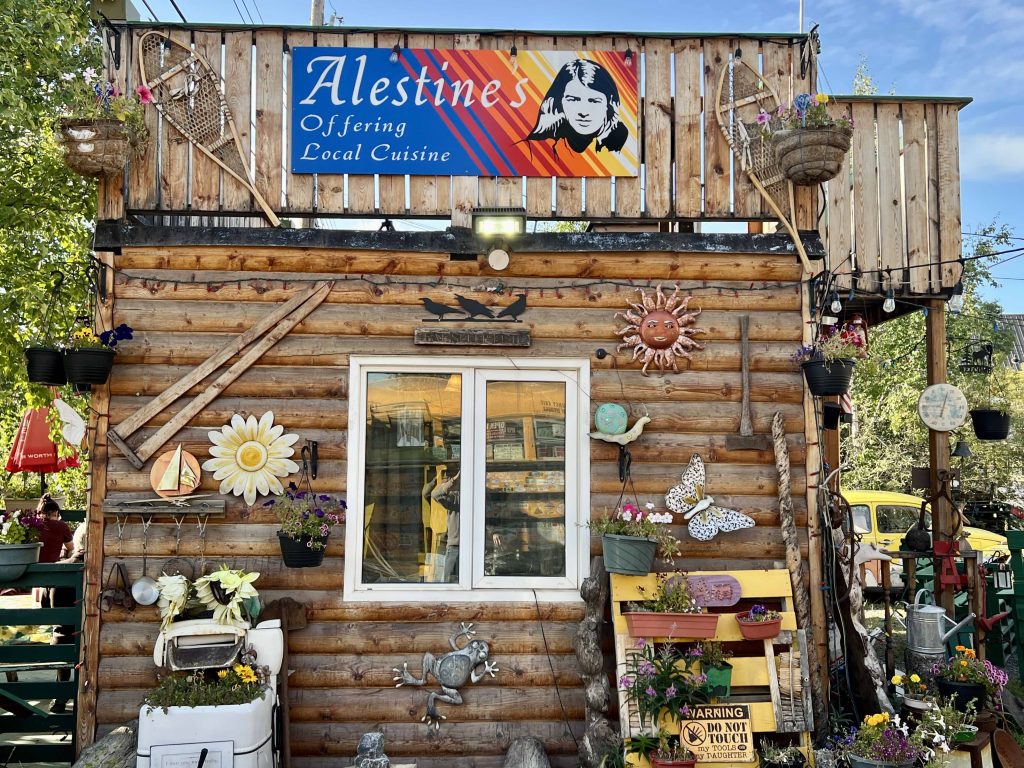
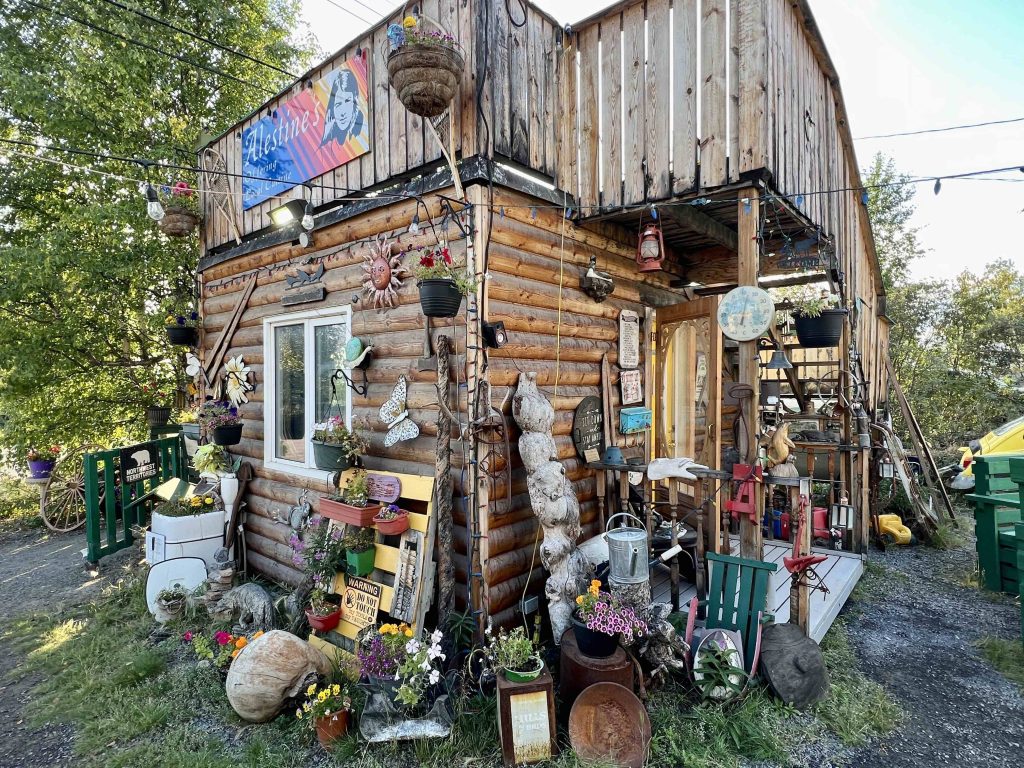
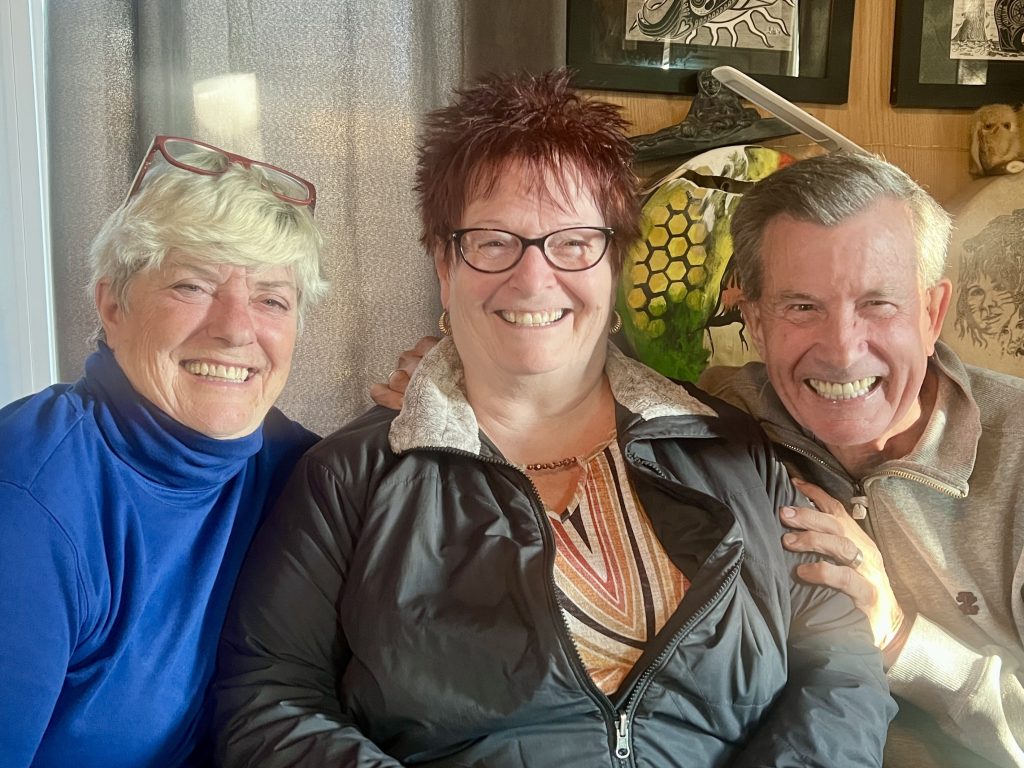
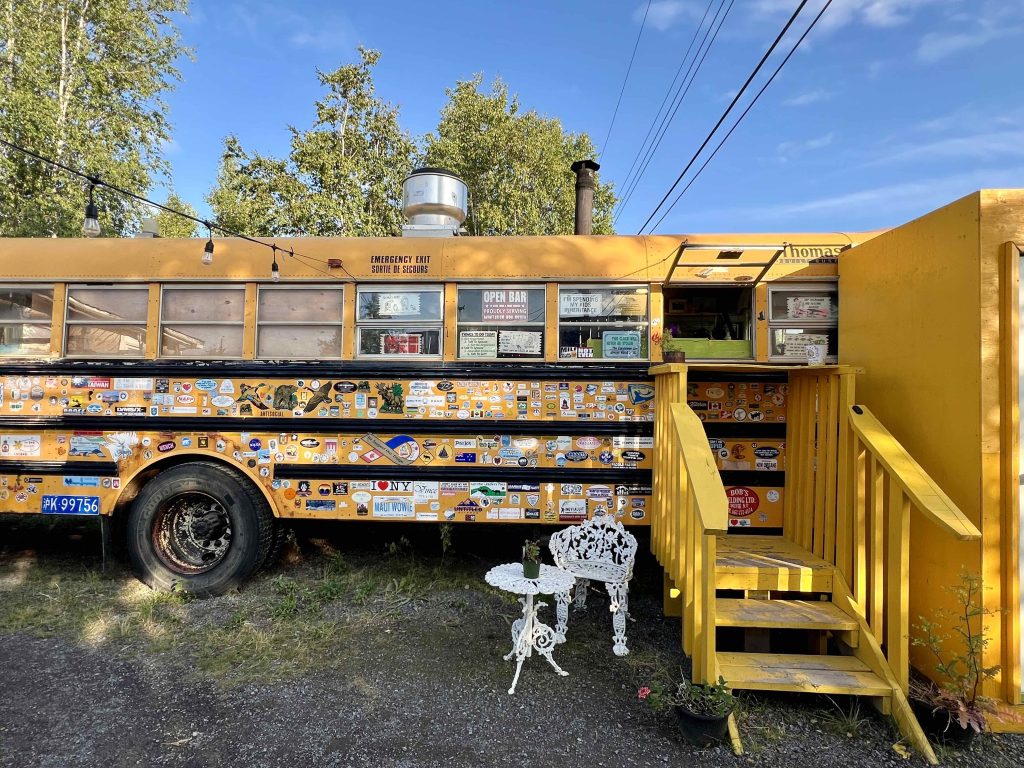
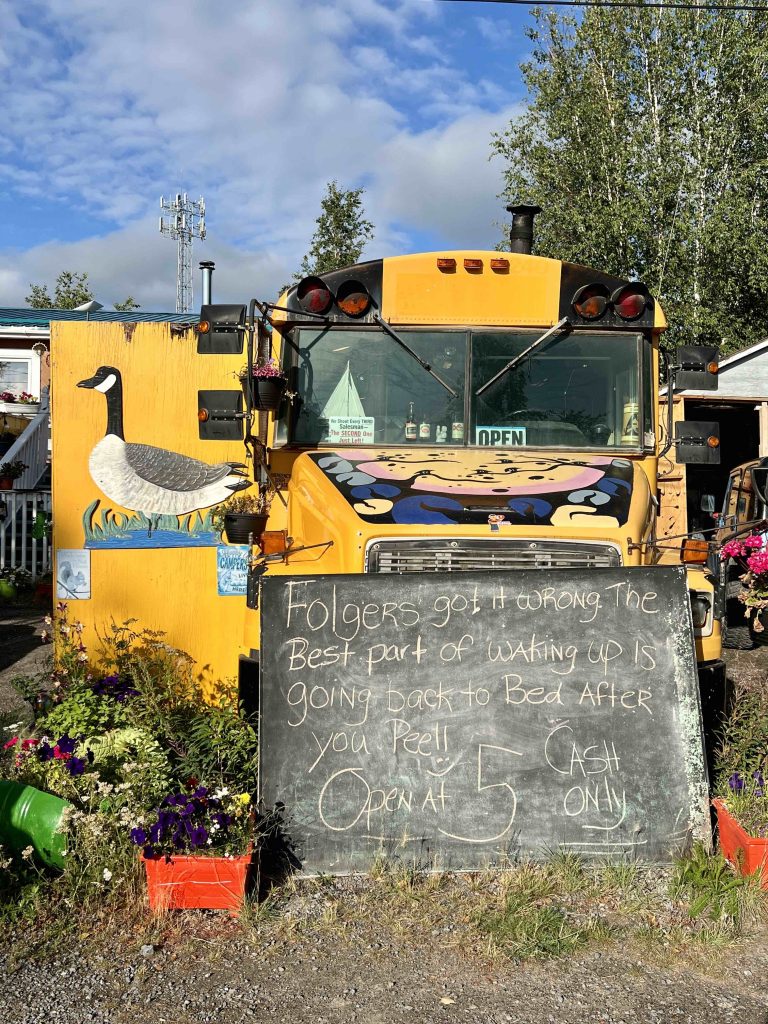
We camped four nights in Inuvik at the Happy Valley Territorial Park, which bordered the Mackenzie River East Channel along the west side of town. That was not much time really, but we nonetheless crammed a lot of activity into our three days. MFI understandably didn’t want to cook after driving 3.5 hours, so I googled “where to eat locally” and picked Alestine’s, a highly recommended restaurant only 700 feet from our RV park entrance. It didn’t look like much, was extremely small (only three tables), but the atmosphere was warm and cozy, the service superb (thanks to Pam), and the food deliciously fresh. In her blog “The Dempster Highway Experience by MFI,” she did an excellent job recounting our dinner and encounter with Arlene Hansen. But I too must acknowledge the extreme kindness shown us by Arlene, a complete stranger until we happened to be seated at the same table as her. We discovered a coffee shop (school bus) on the restaurant property. Never had a coffee there but liked the sentiment on their chalkboard.
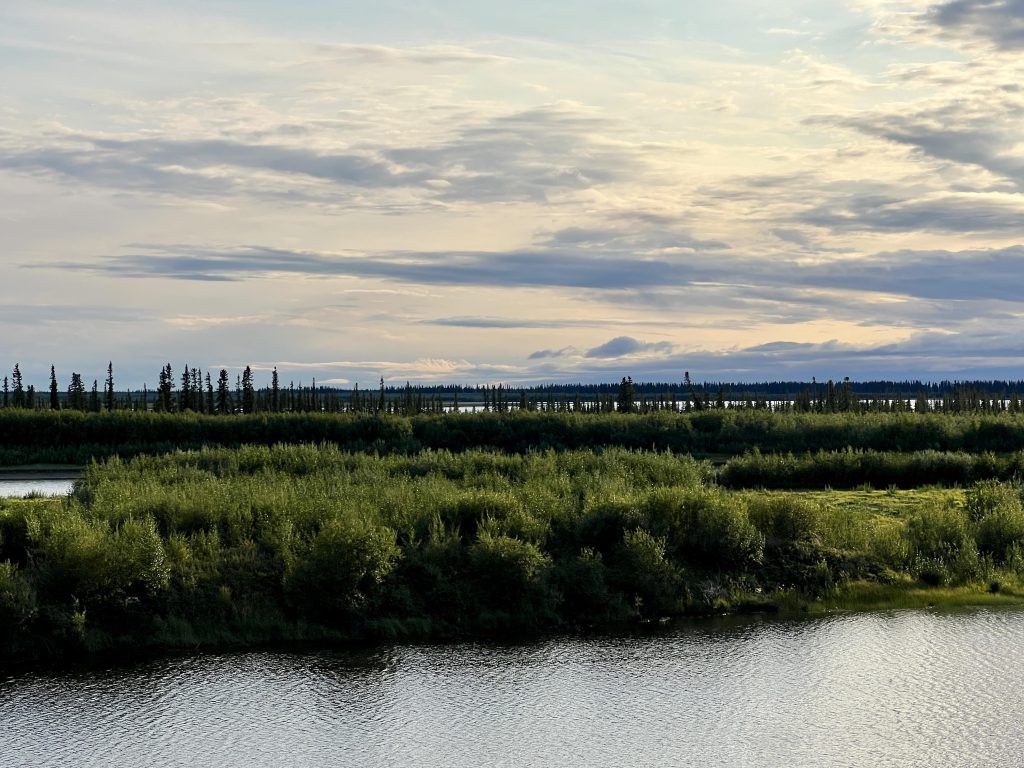
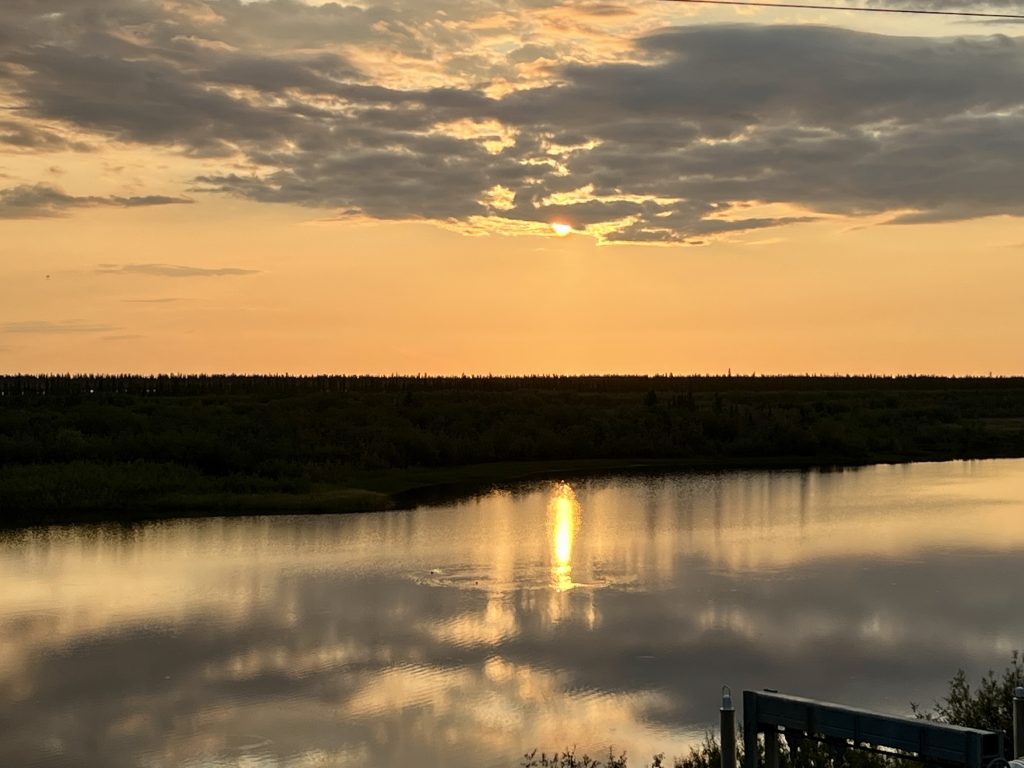
After dinner, we returned to Arthur to enjoy both the view west from the RV Park and a golden sunset. We shared another “it’s-good-to-be-alive and aren’t-we-fortunate” moment together, then went to bed early.
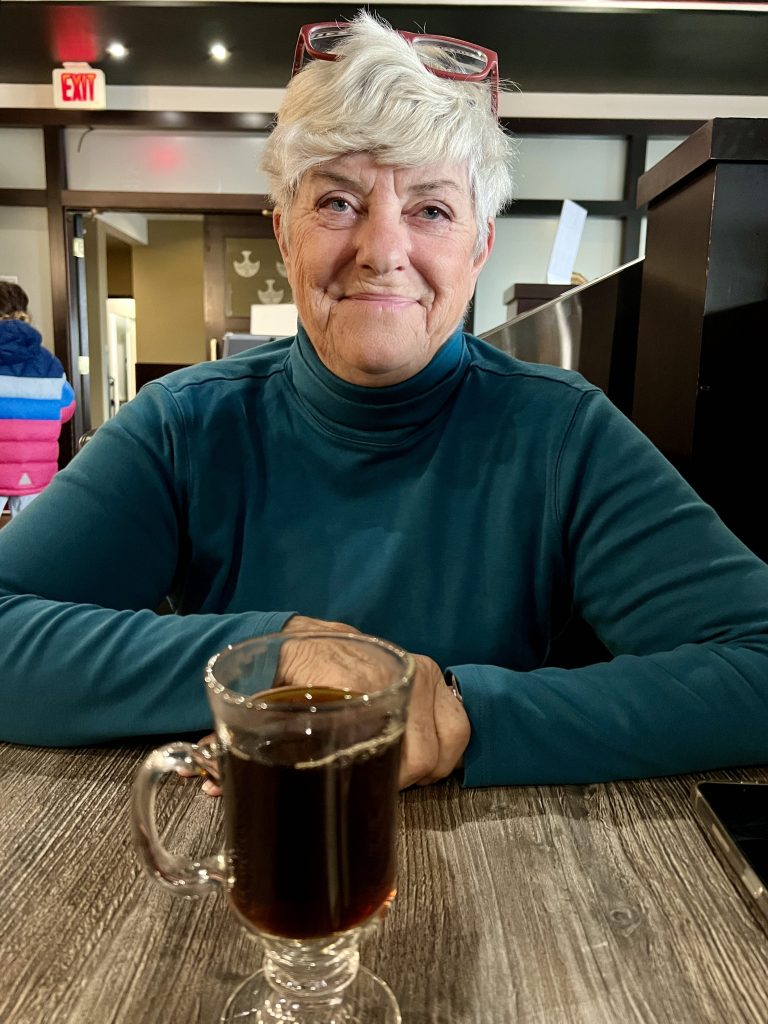
Next morning, our top priority was finding a place for coffee and breakfast. Again, I asked Google and was surprised at how few choices there were. We opted for the Mackenzie Hotel restaurant called Mamaqtuk. We chose it because of their website mission statement. In part in stated, “Our goal is to provide a unique and immersive dining experience that promotes Inuvialuit culture and traditions, while contributing to the sustainability of the local ecosystem…” The dining room and hotel lobby were decorated with numerous Inuvialuit art and cultural pieces and several historical displays. As in all cultures, artisans combined local resources with skills learned from elders to create the things needed for living and enjoying life.
We toured the dining area and saw specific colors and geometric shapes, often repeated on the art and cultural objects we experienced. The seal-skin drums were called Quilat and were used in ceremonial dances to raise the spirits. Artisans used driftwood for making the frames for Quilat and Qayaq (kayaks). The Inuvialuit also stacked stones, often to great size, in formations they called Inukshuk, which were used as landmarks or sometimes to help direct herds of caribou toward hunters. All three of these items were considered strong symbols of indigenous tradition and culture.
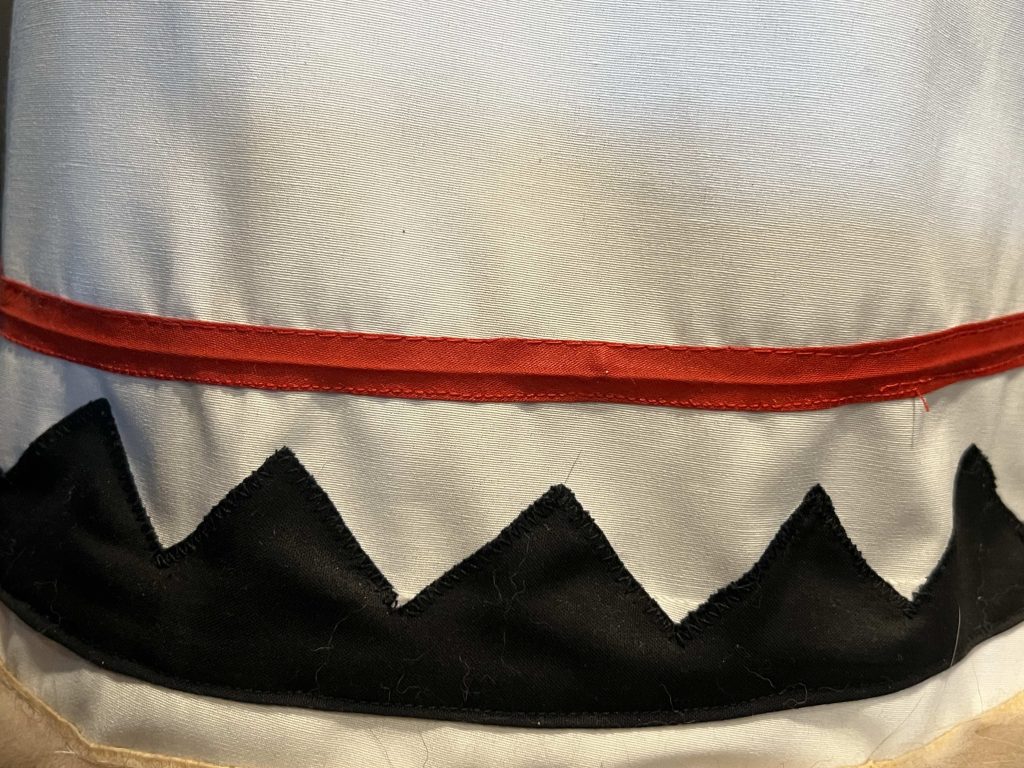
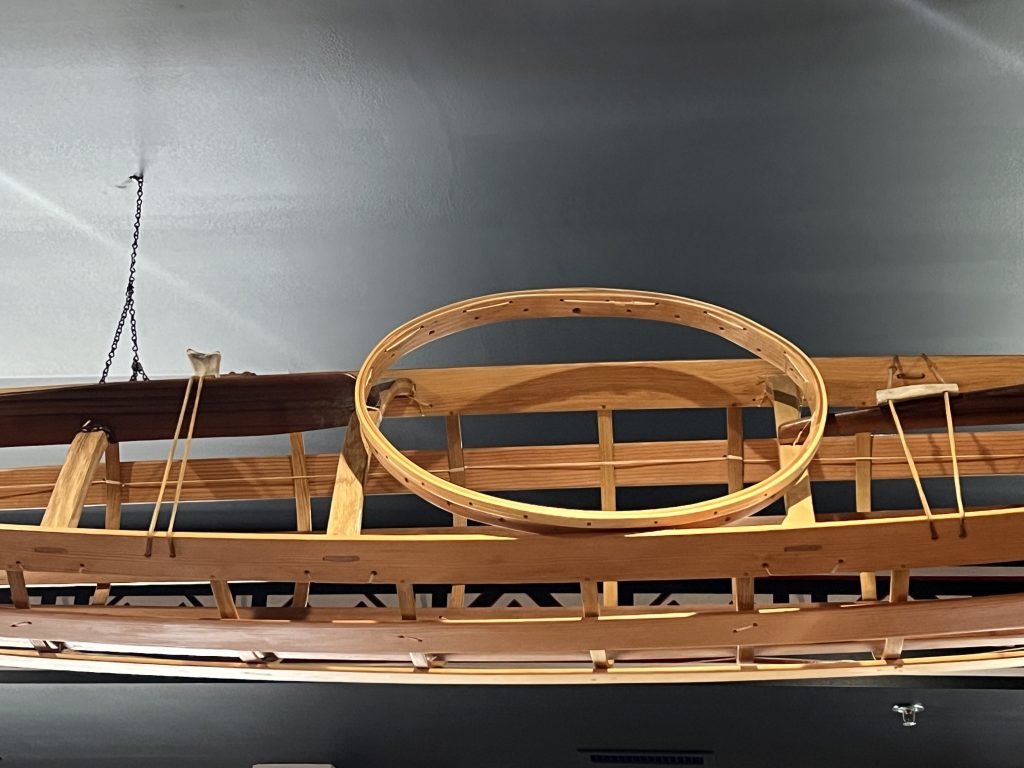
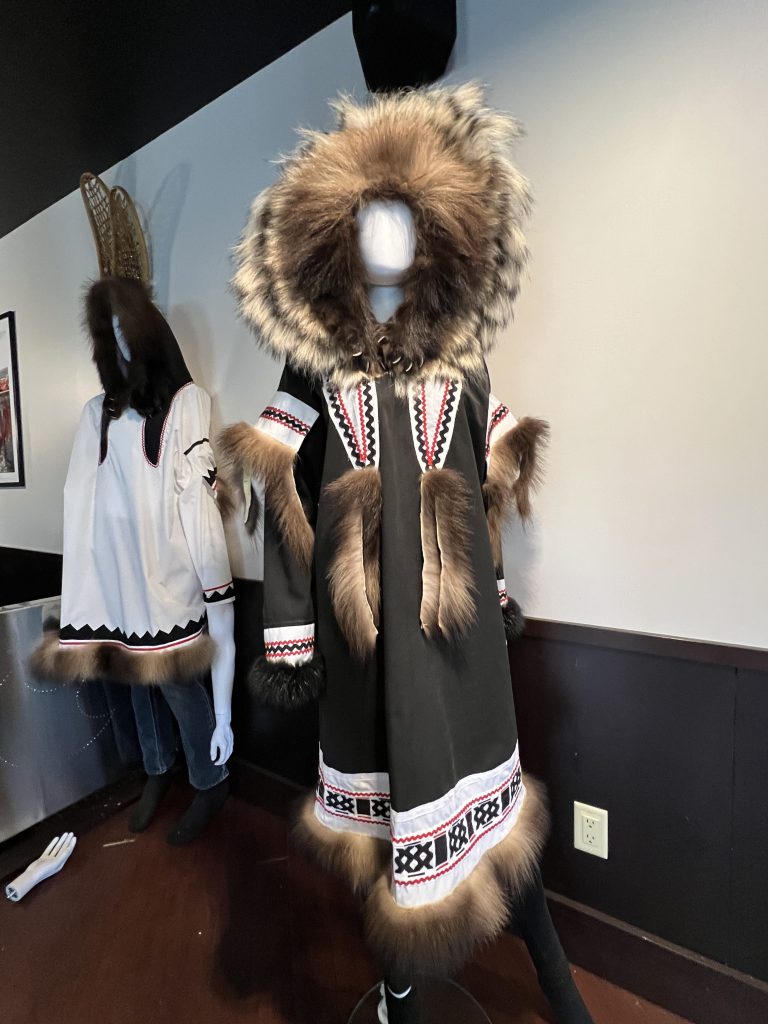
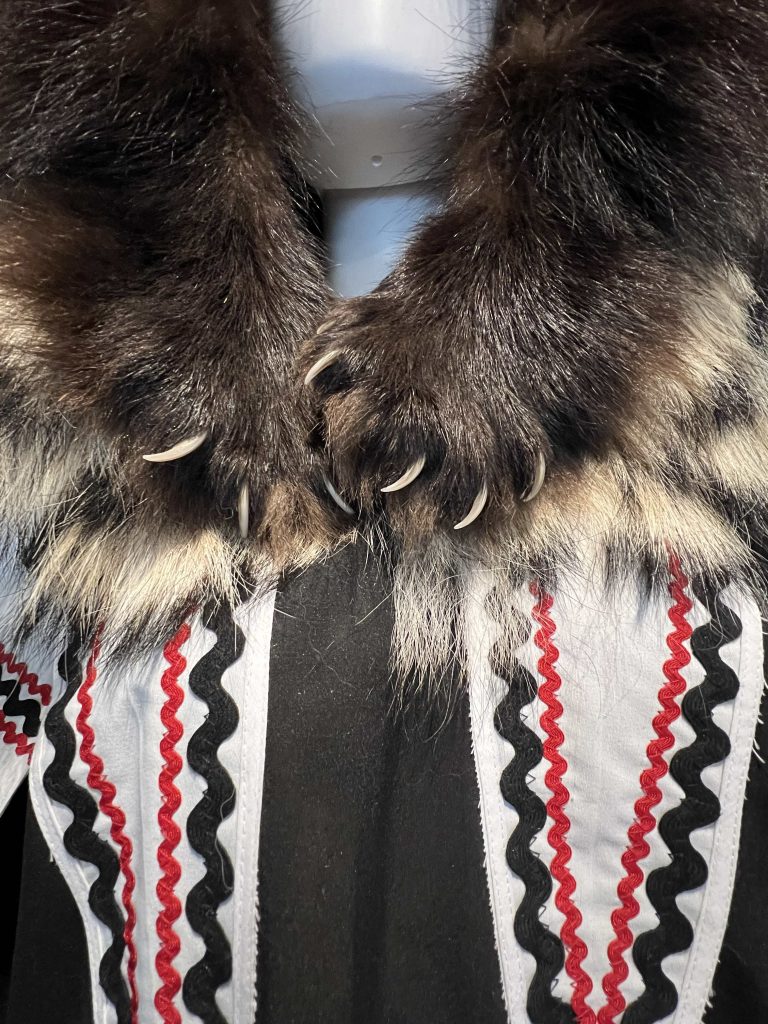
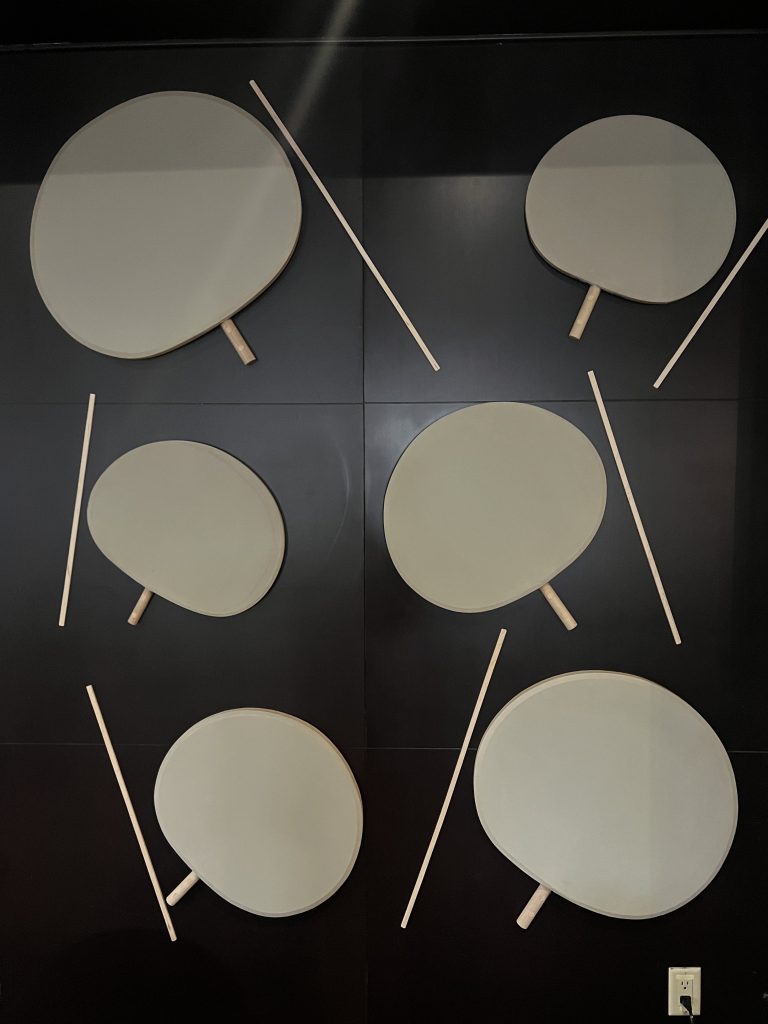
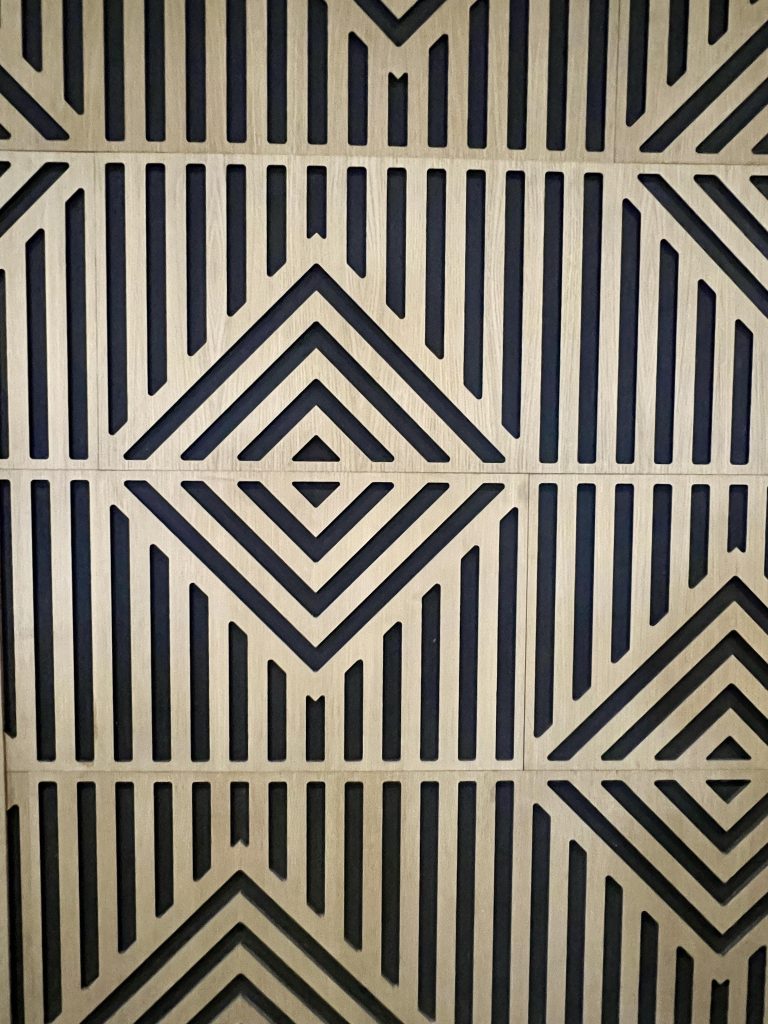
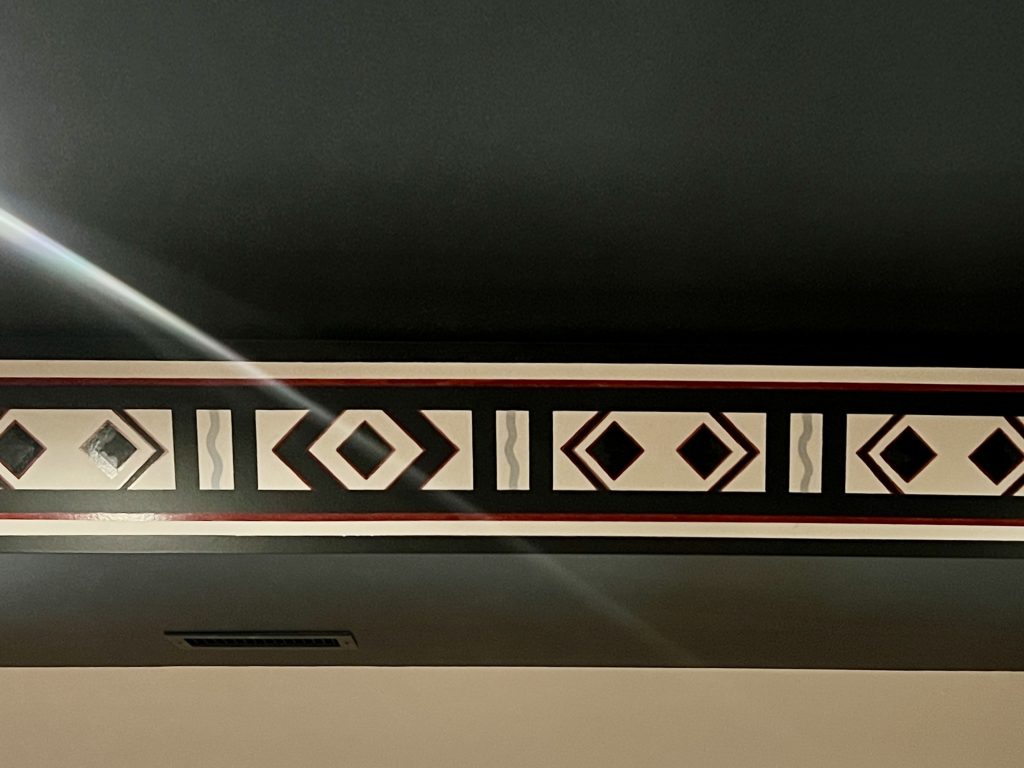
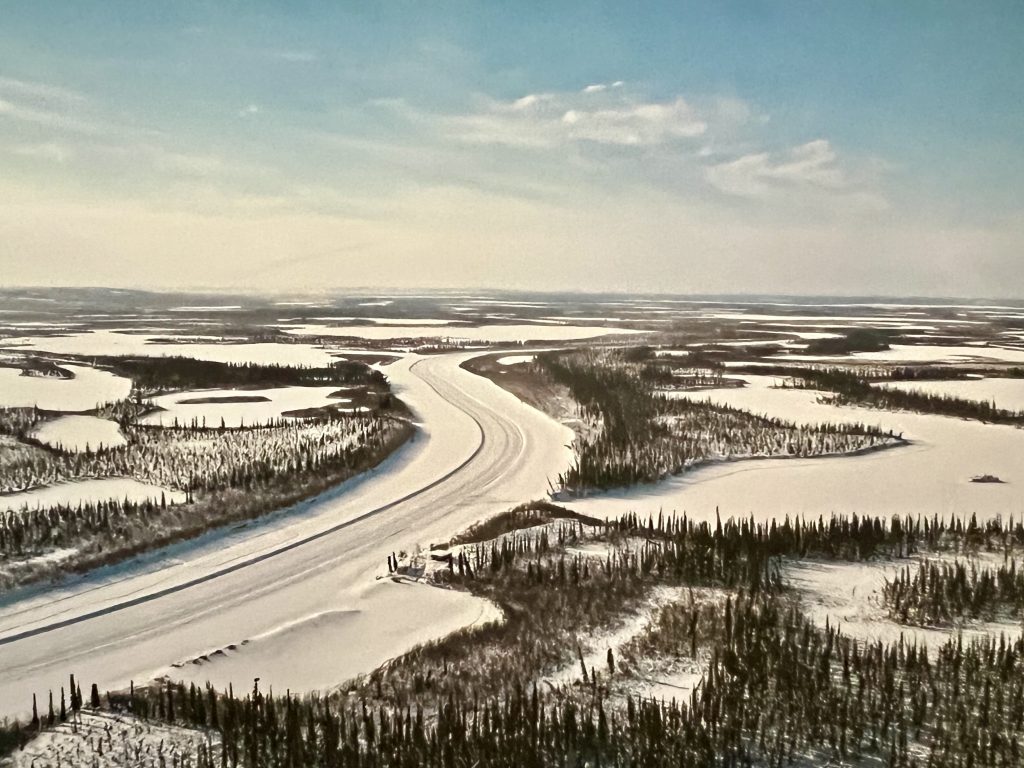
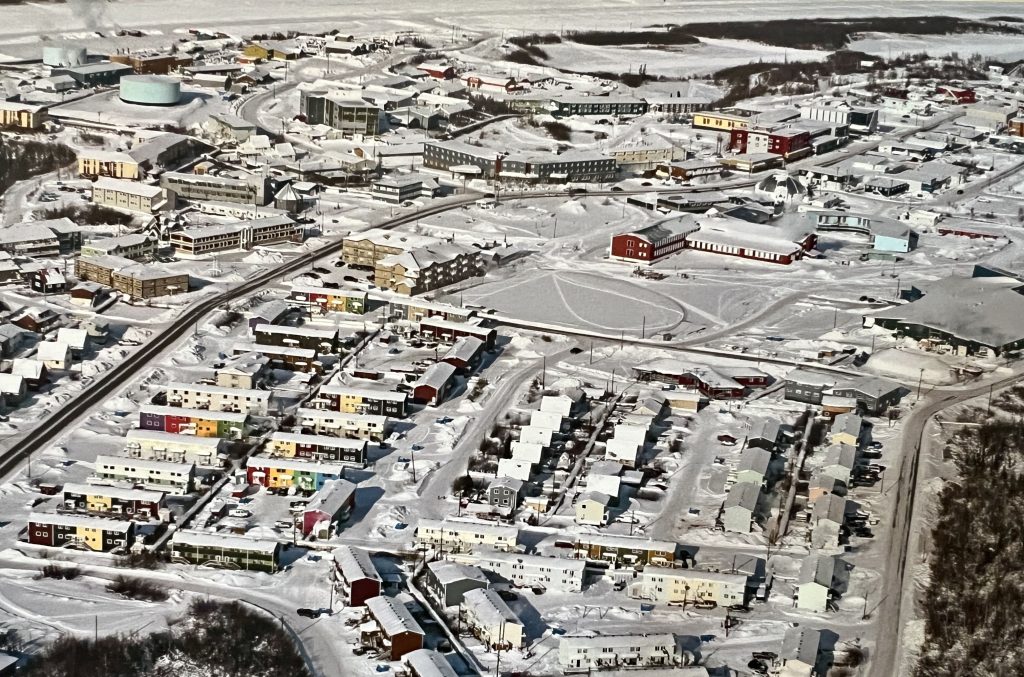
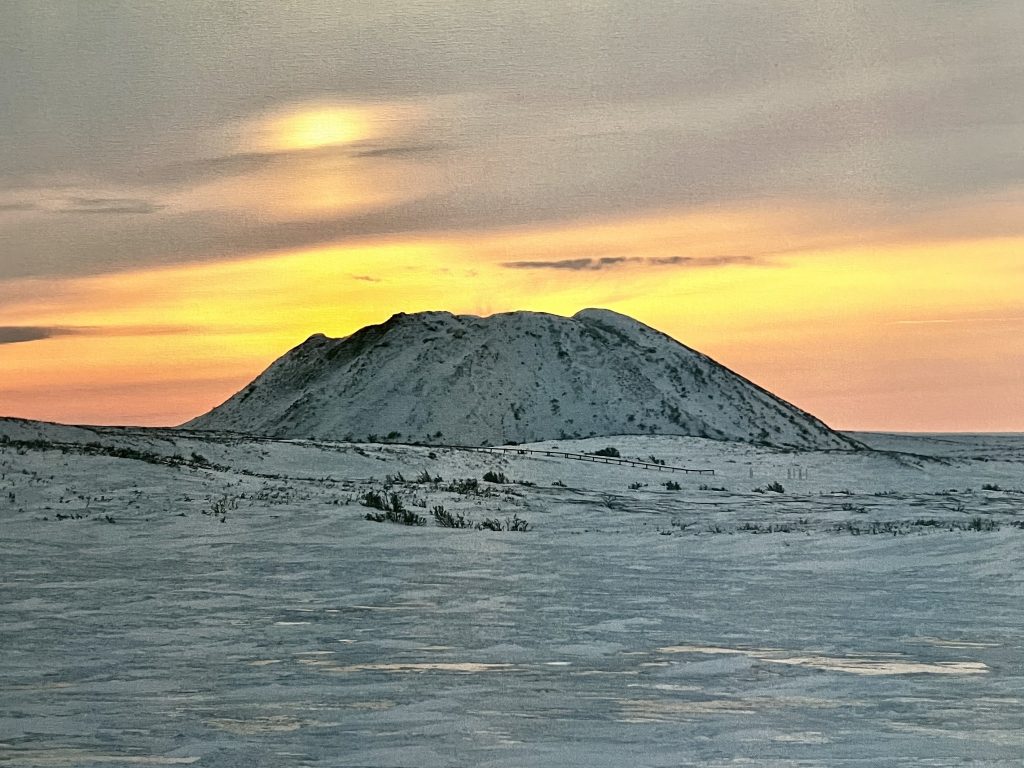
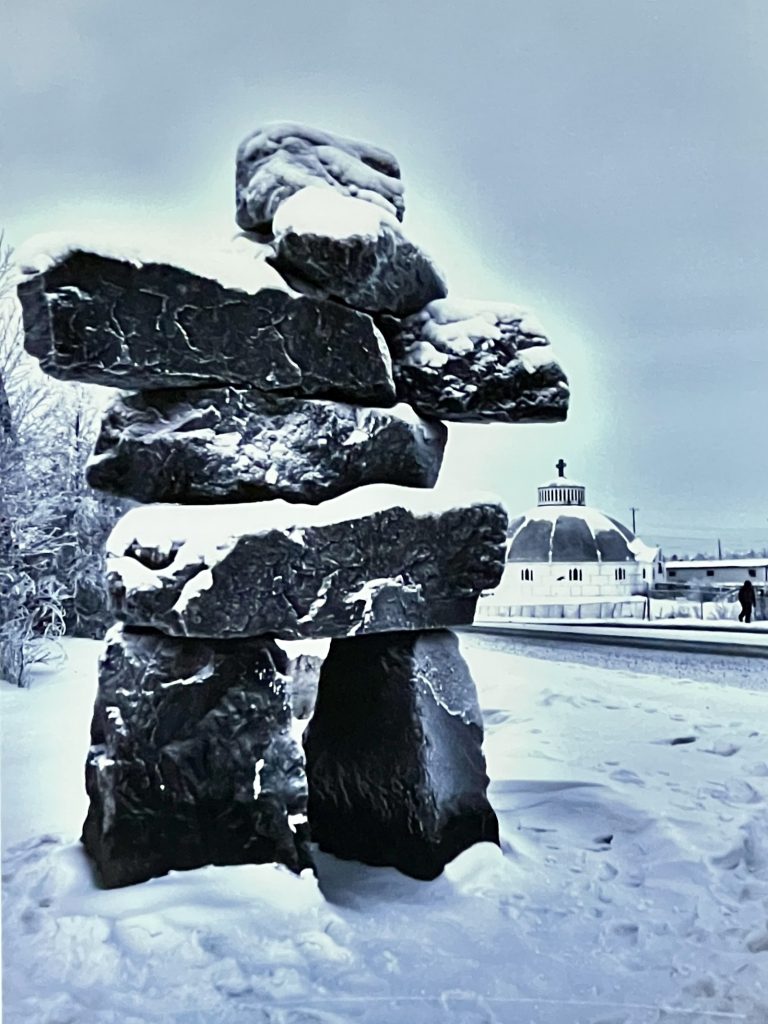
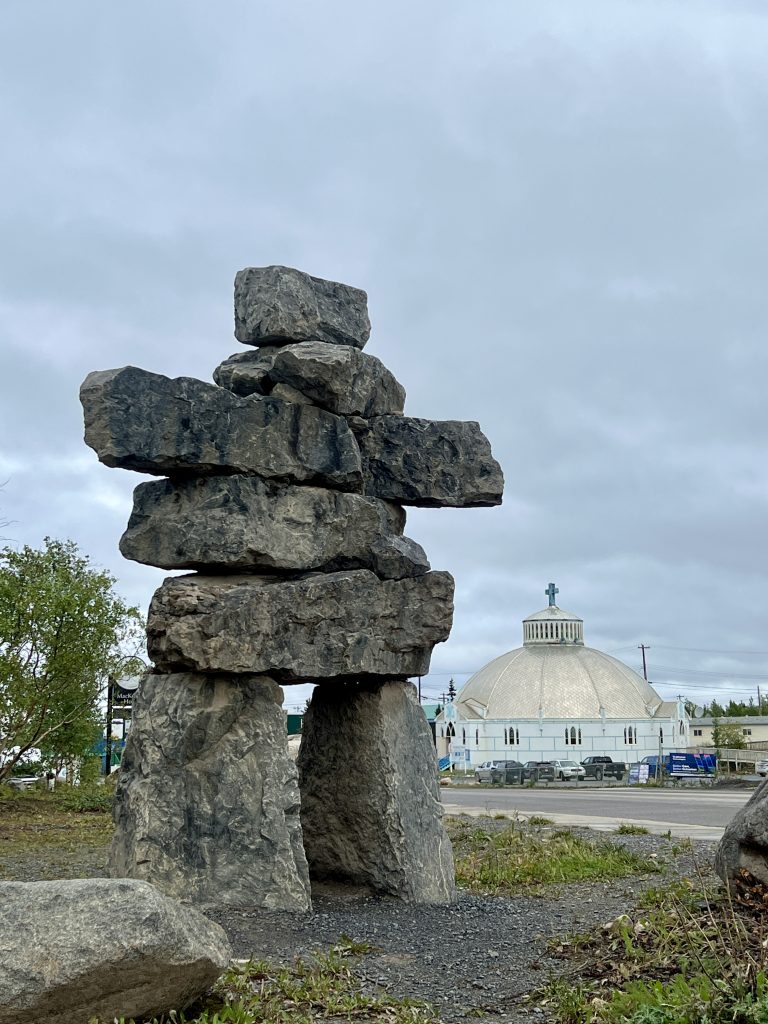
We spent more time walking through the lobby and taking in the artwork on display. Yellowknife, NT photographer, Tawna Brown, had a number of pieces on display. My favorites were her winter-season aerials of the East Channel ice road, Inuvik, and the Ibyuk Pingo (more on this later). She also photographed the 9-feet tall Inukshuk standing in front of the hotel, as did I, because I couldn’t resist. That’s the famed “Igloo Church” in the background.
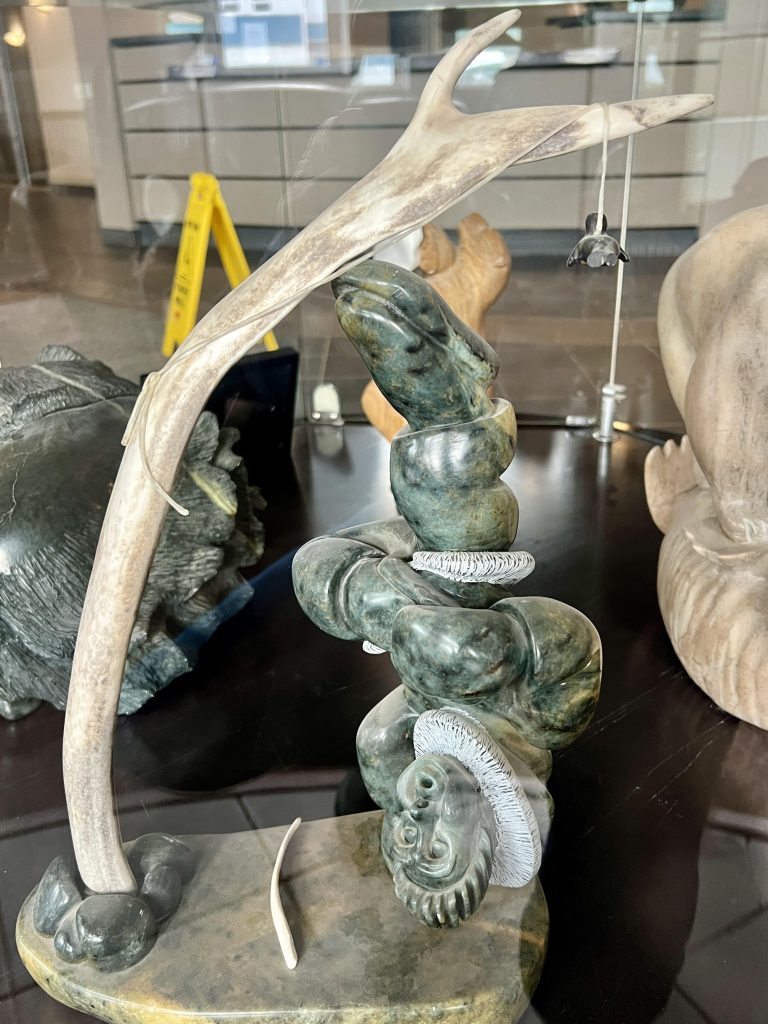
Paulatuk carver, Francis Ruben, presented for sale a number of his carvings in glass display cases. His great sense of humor seemed on dislay, as well. Again, I took pictures of my favorite pieces and especially enjoyed the flamboyant caribou.
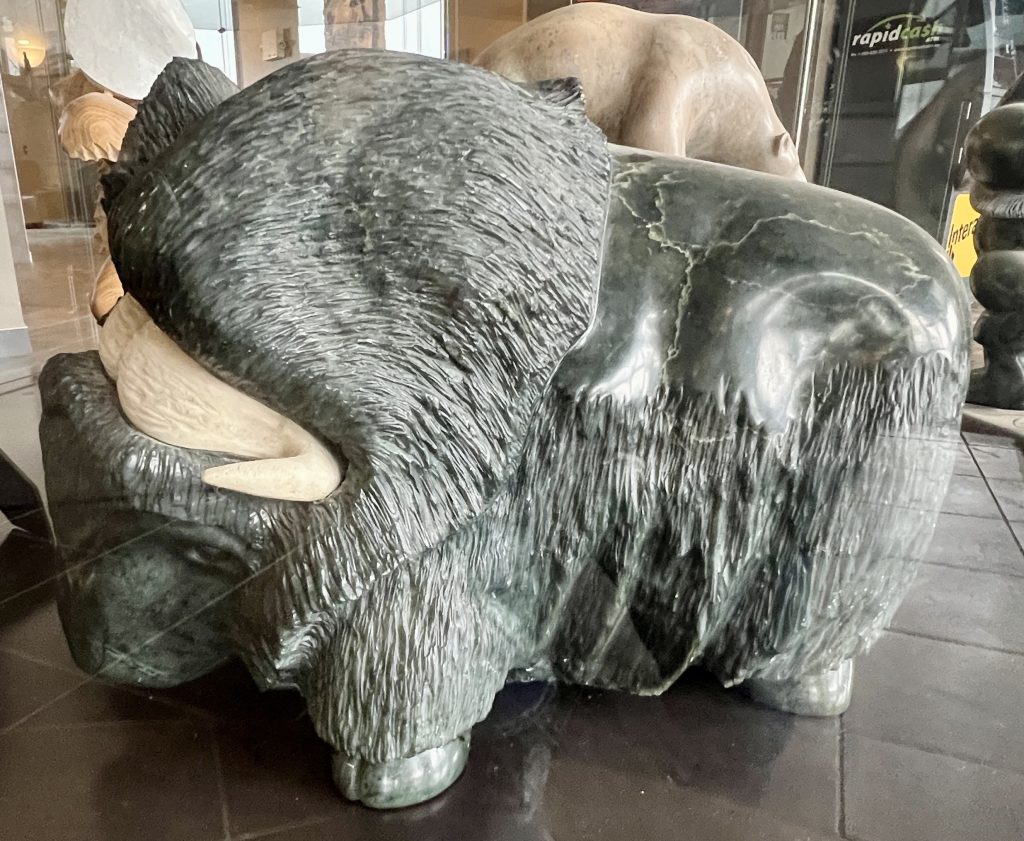
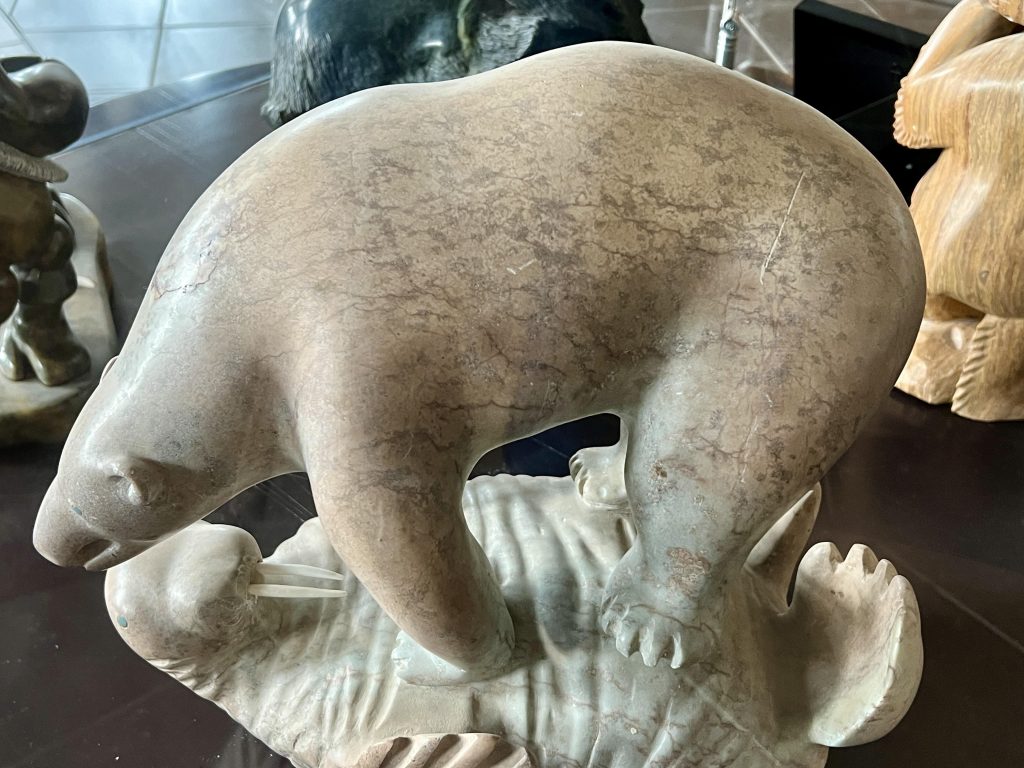
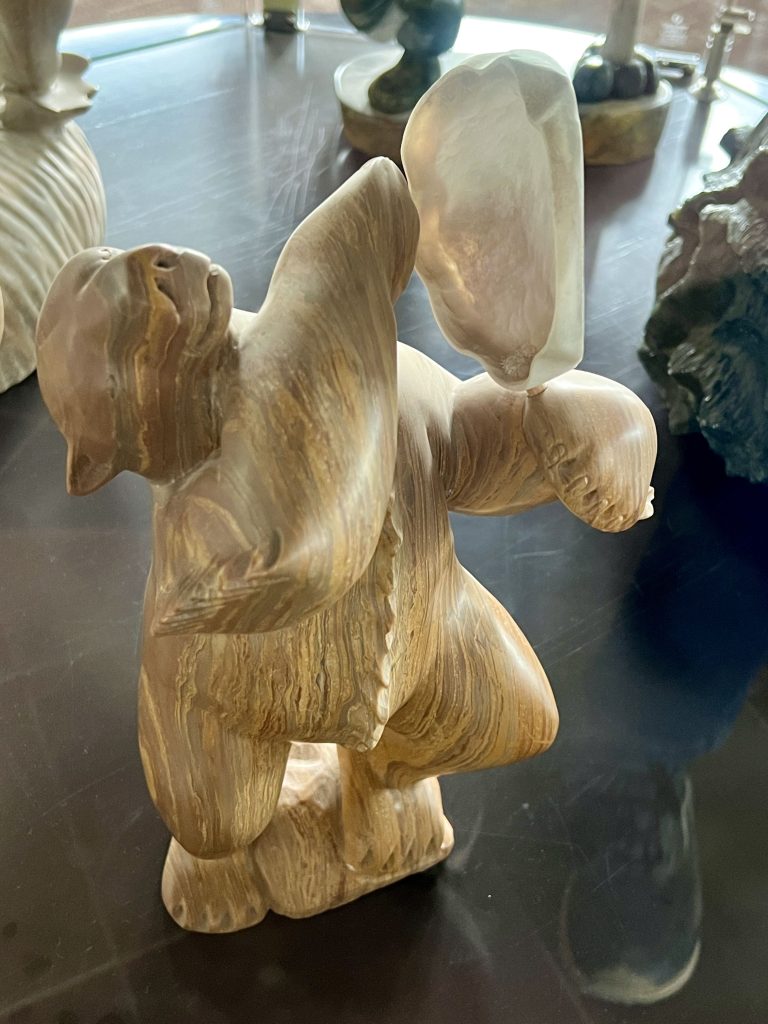
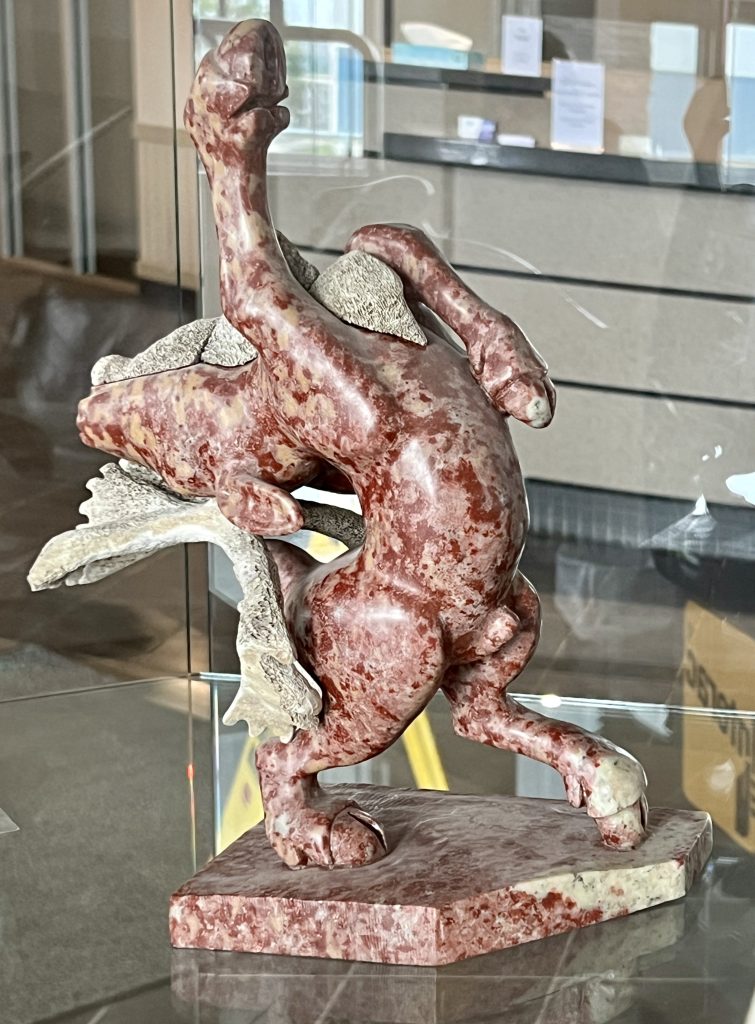
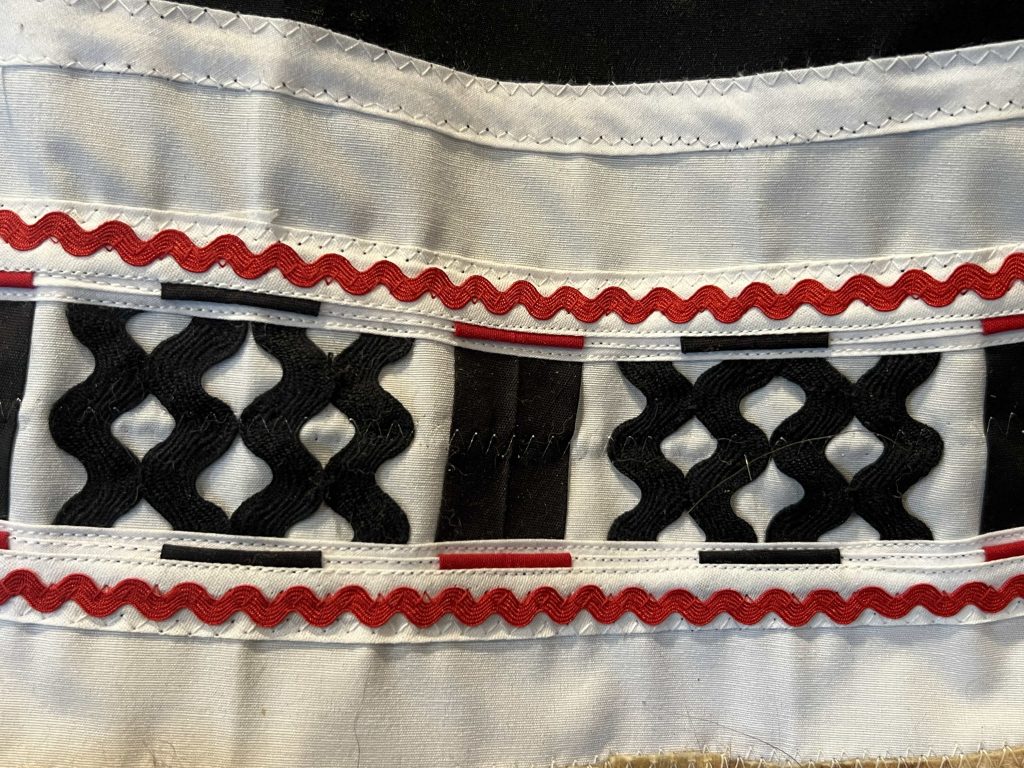
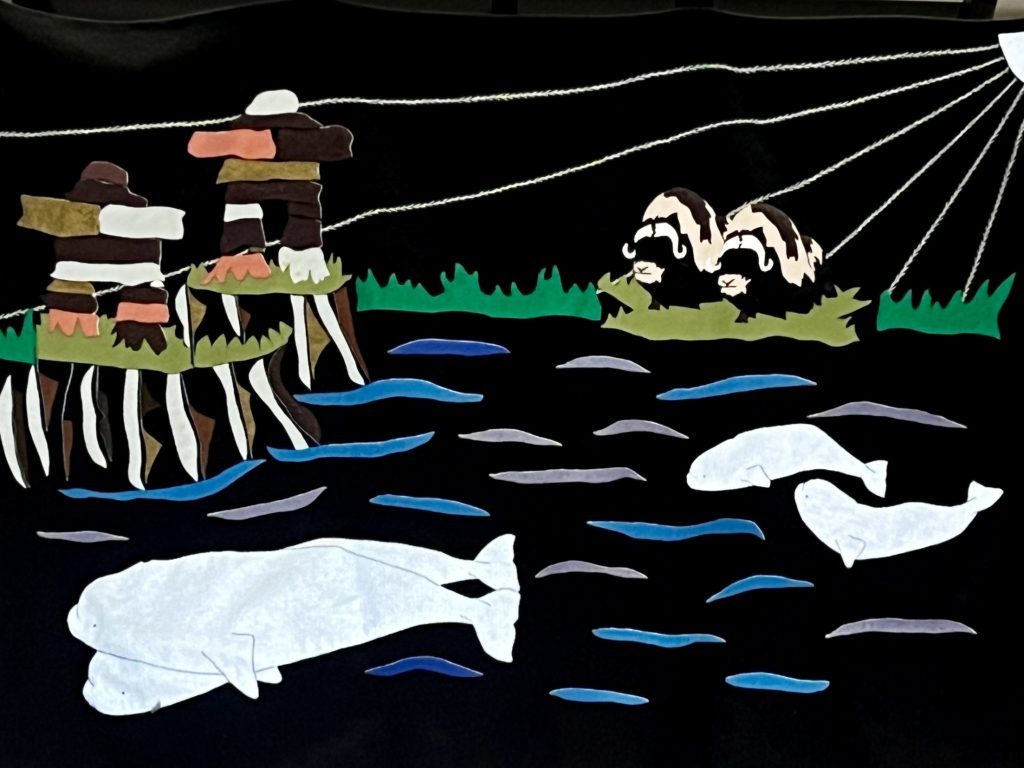
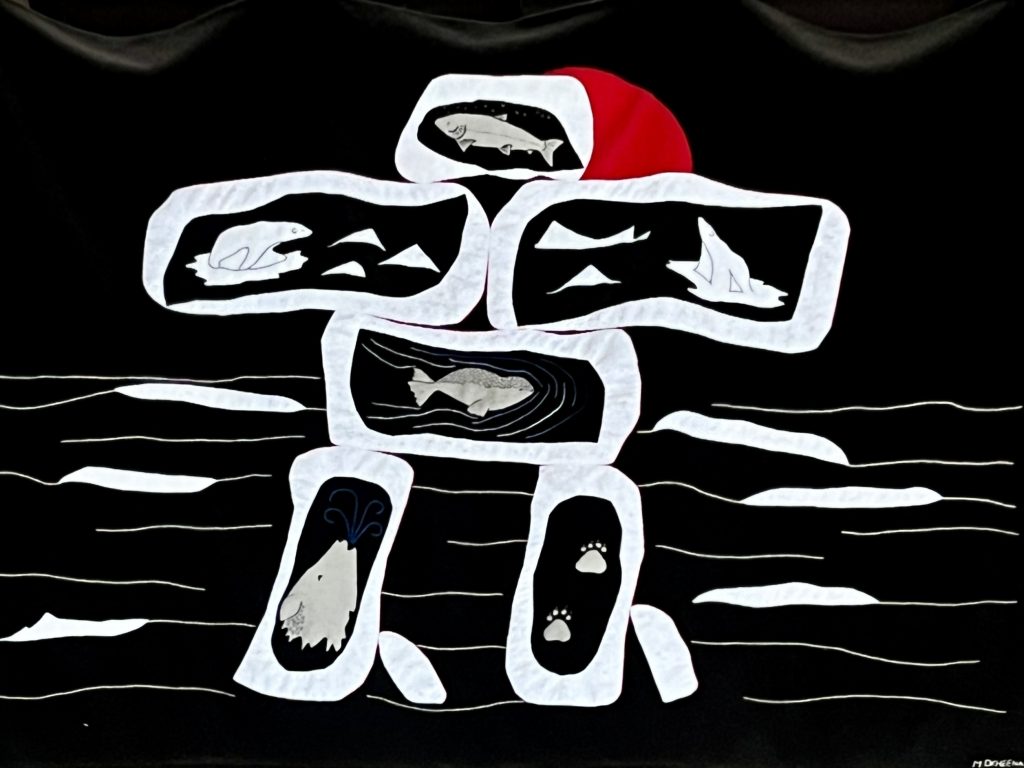
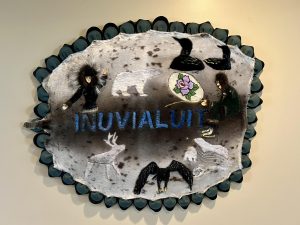
Finally, we saw these three large tapestries hanging high above the hotel check-in counter and a shield of sorts with stitching and embroidery on a Harp Seal skin. The artists were unnamed, but the pieces were interesting examples of indigenous art techniques.

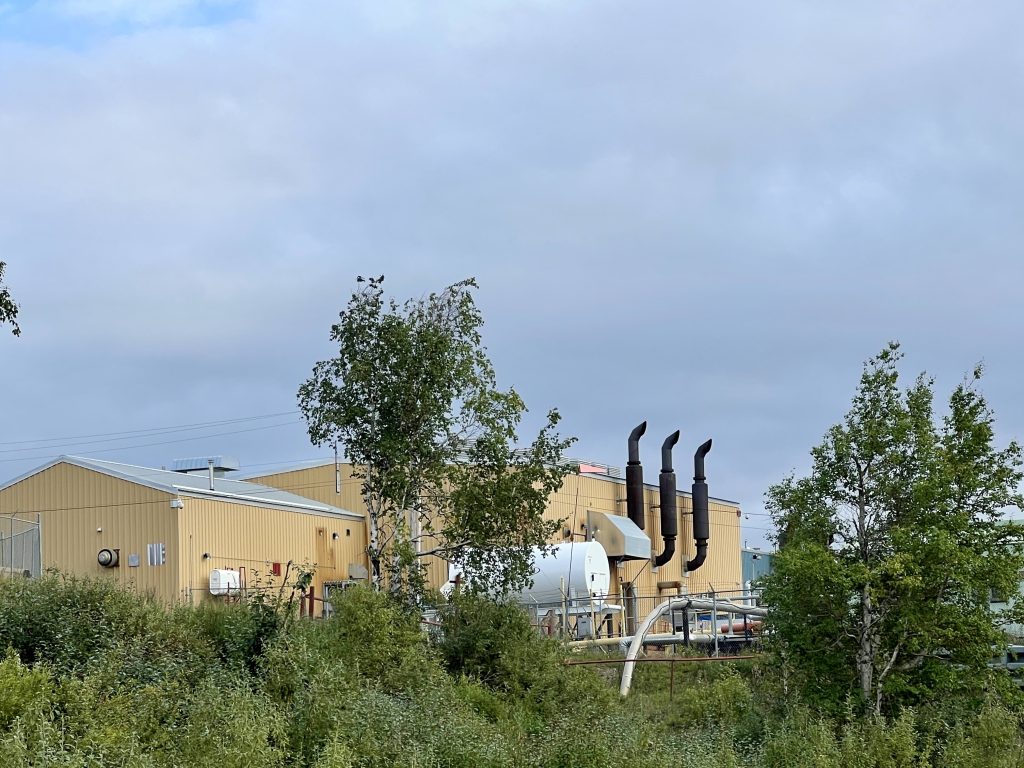
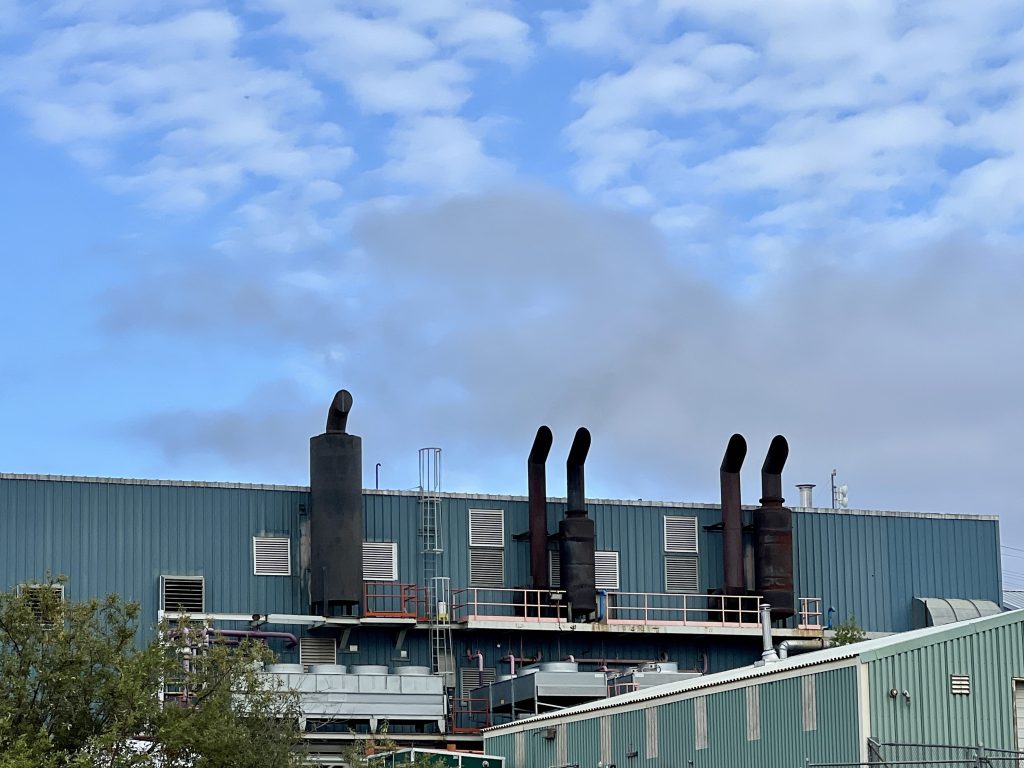
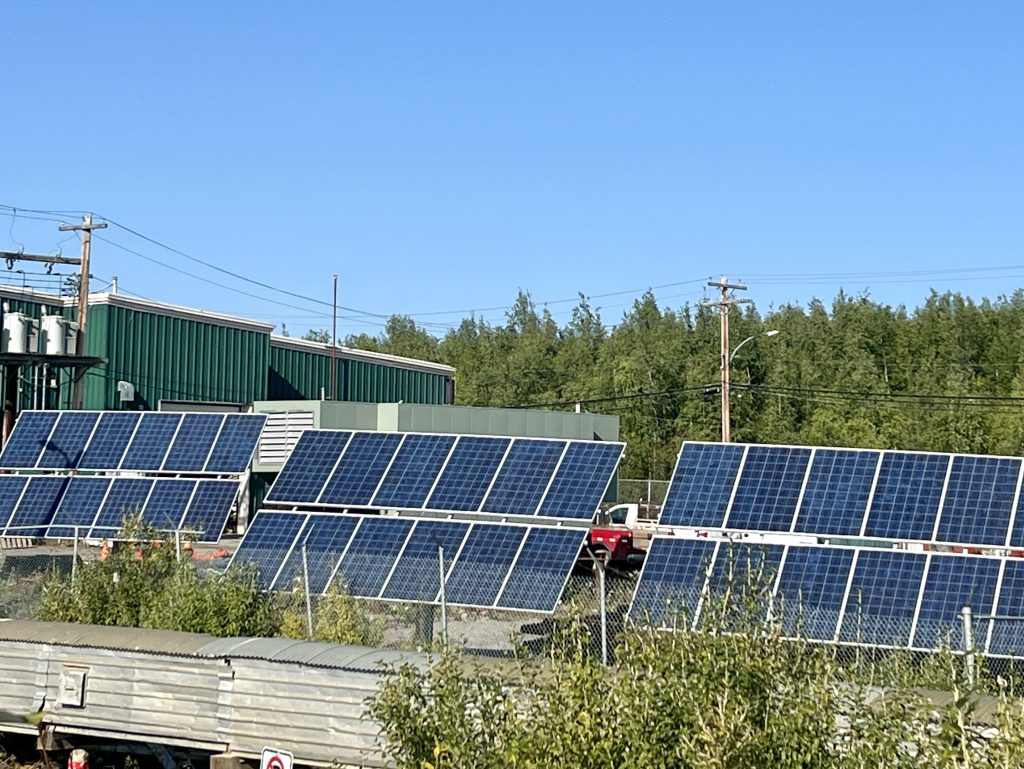
The construction of Inuvik was completed in 1958, an incredible 21 years before the Dempster Highway was finished. It was designed as a base for development and administration in support of the Inuvialuit and associated First Nation peoples, but also as a center to provide education, medical care, and new opportunities to the northwest Arctic. Inuvik became Canada’s largest community north of the Arctic Circle and pioneered cold region engineering and design practices for building infrastructure. The most obvious result of this was Inuvik’s above-ground, pile-supported, and fully freeze-protected municipal water and sewer systems. Electricity was provided by two power plants, which housed a total of seven diesel generators. As a civil engineer, I felt right at home, because this was exactly the type of utility infrastructure I was responsible for while stationed at Thule Air Base.
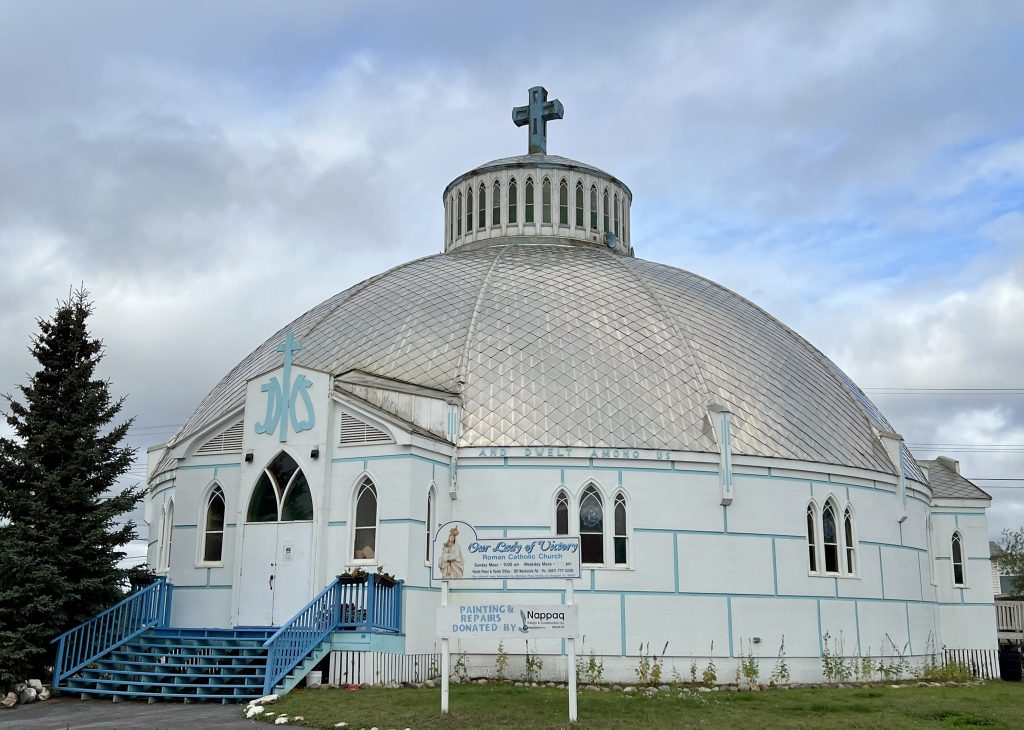
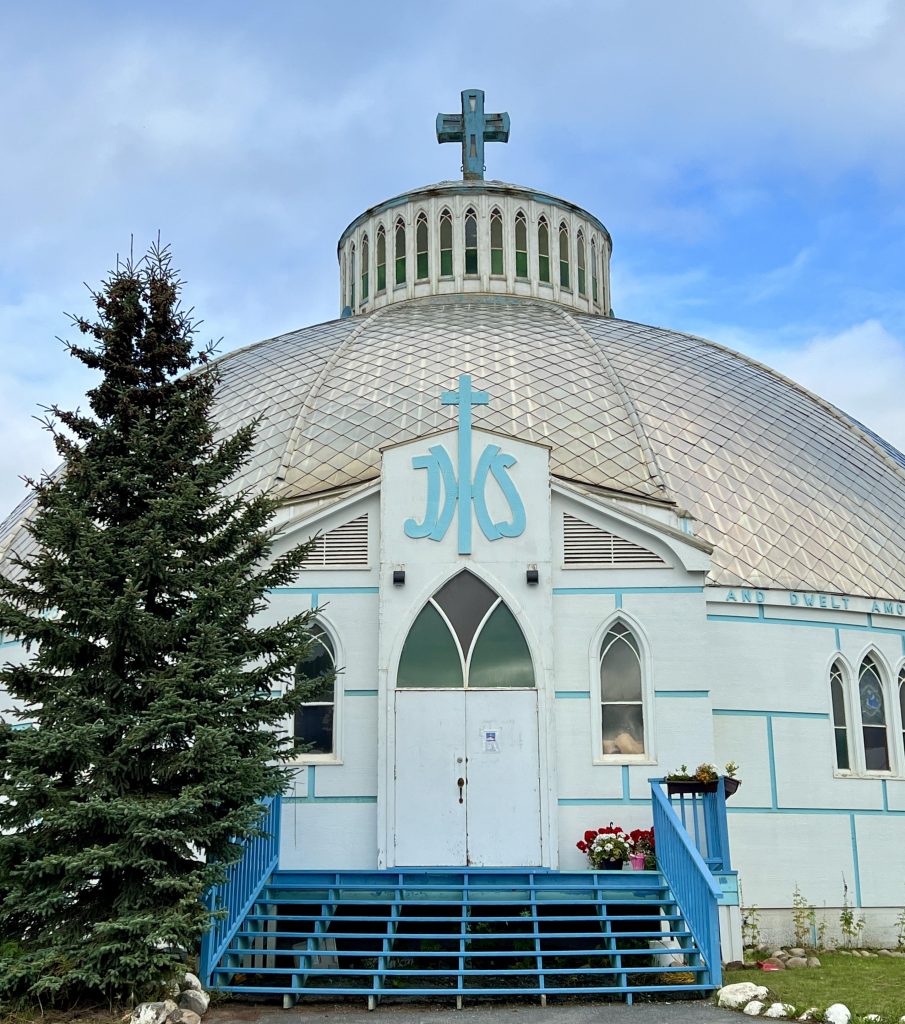
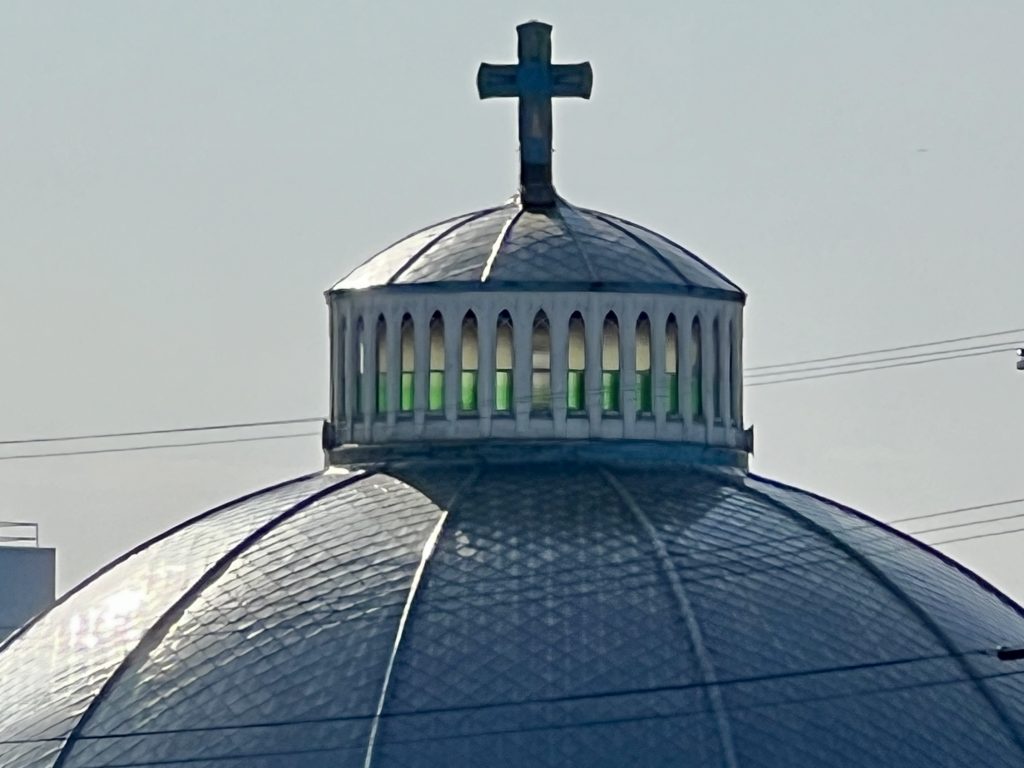
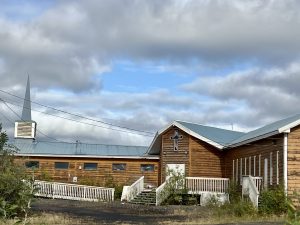
I hiked twice during our visit, and as a part of each, I passed through town and took photos designed to give readers a deeper view of Inuvik. I photographed churches, schools, housing, government buildings, and retail shops. The churches pictured below include: Our Lady of Victory Church (domed) and the Anglican Church of the Ascension. The first was known as the Igloo Church and had been a favorite tourist attraction since its construction in 1960.
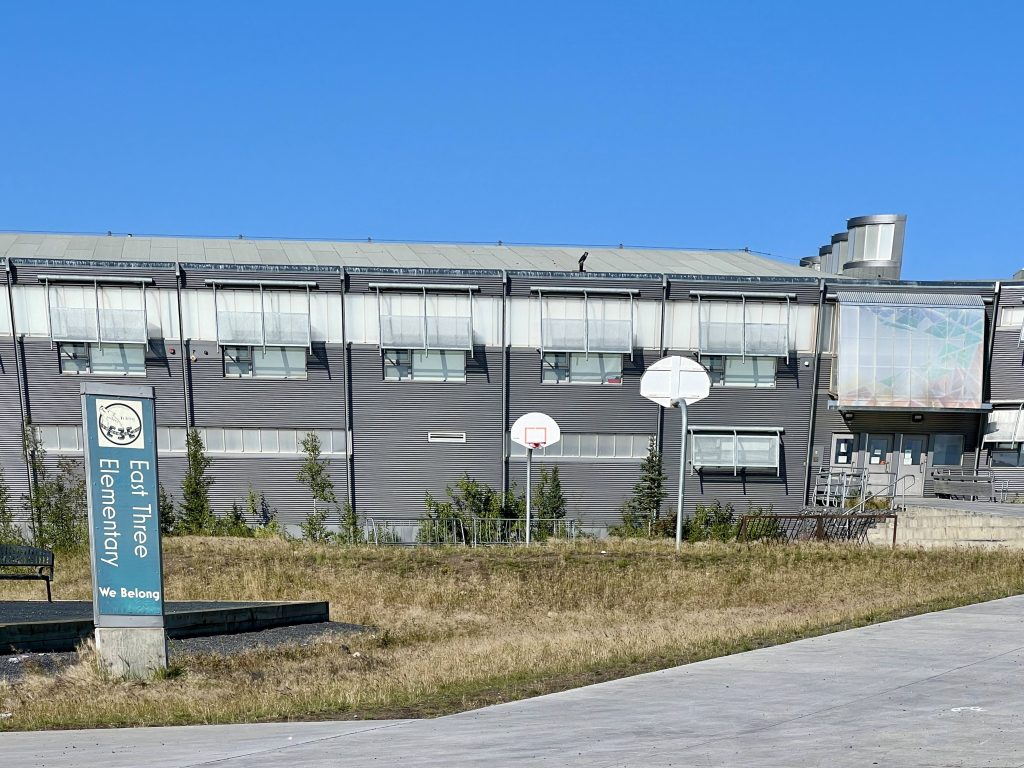
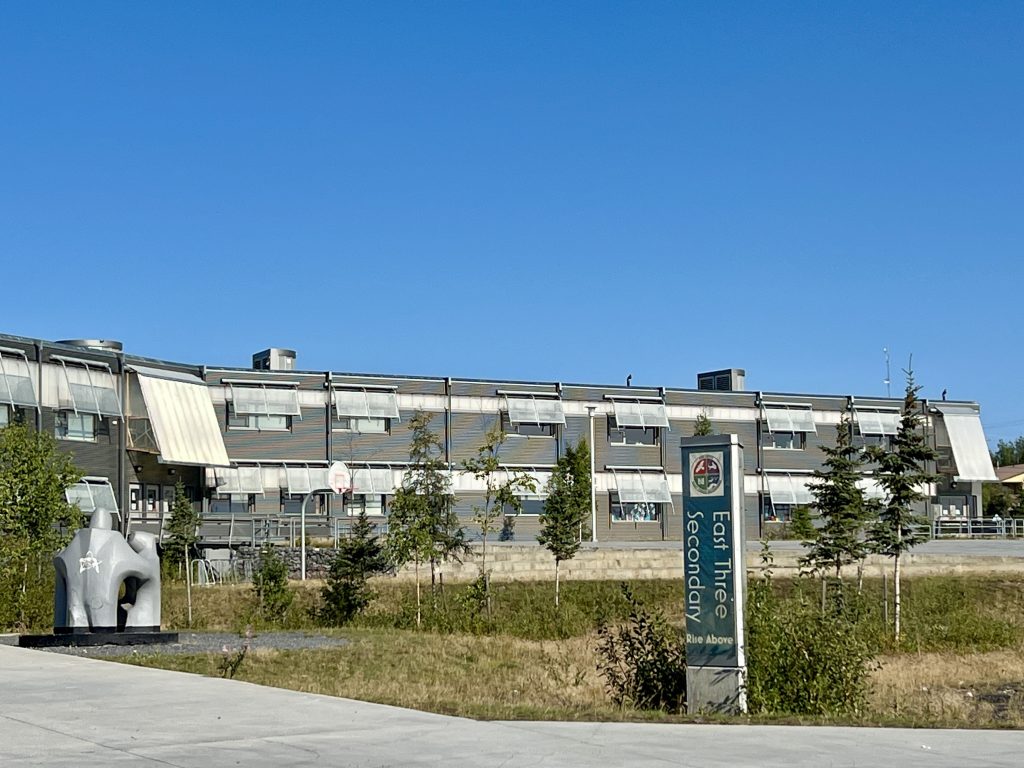
The education and development of children was a high priority in the community. The elementary school was massive, serving much more than just Inuvik, and we were impressed that there was a college. Didn’t see the high school.
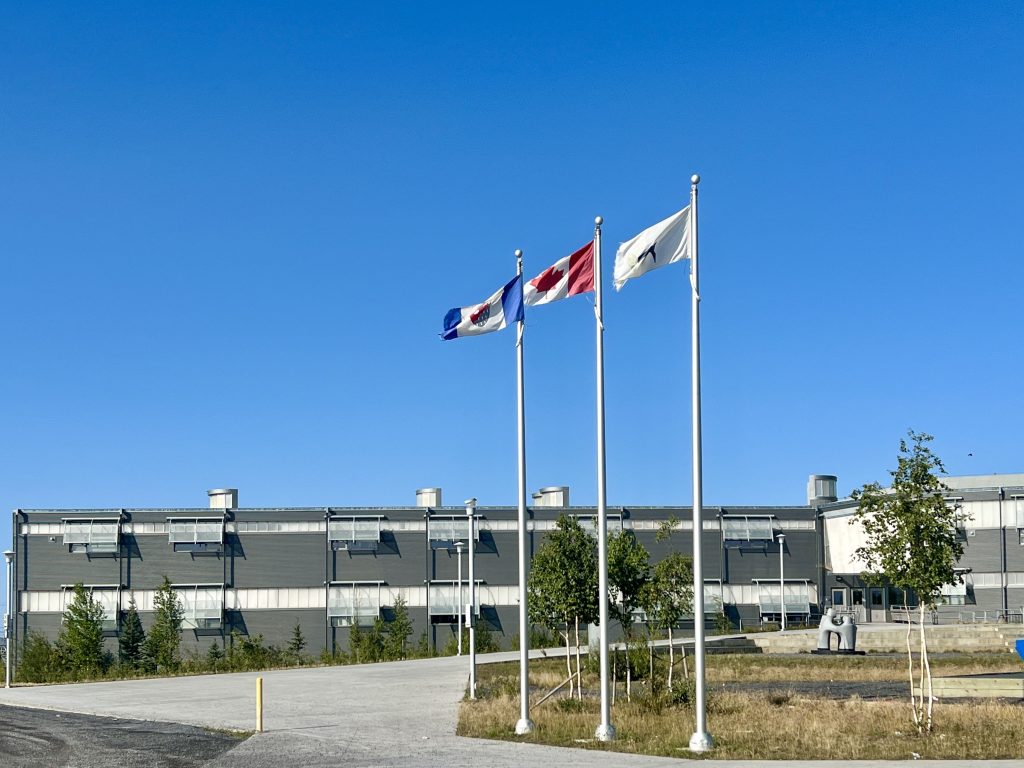
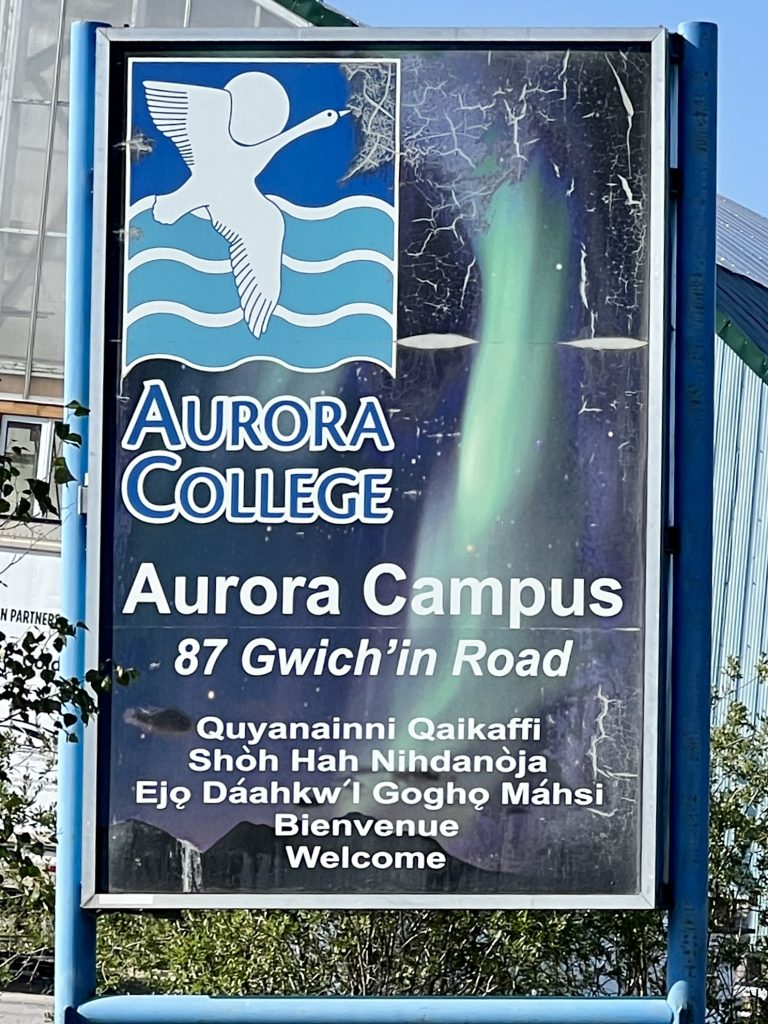
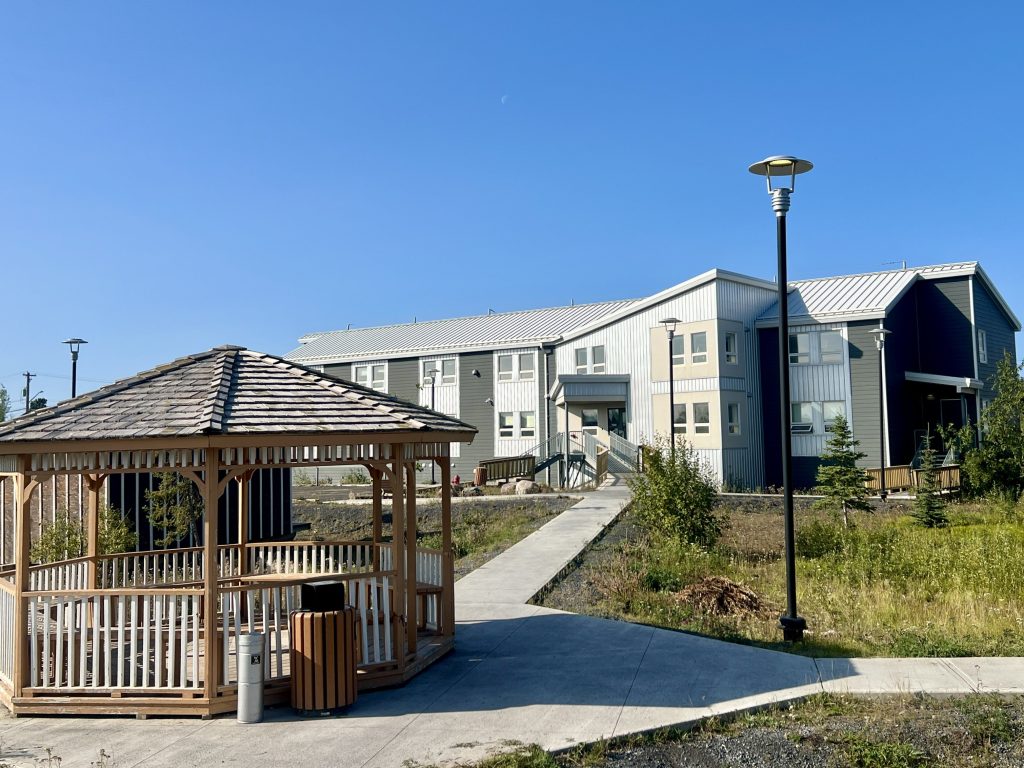
We saw single family residences and multi-family apartments and condos, similar to the one Arlene owned (not pictured).
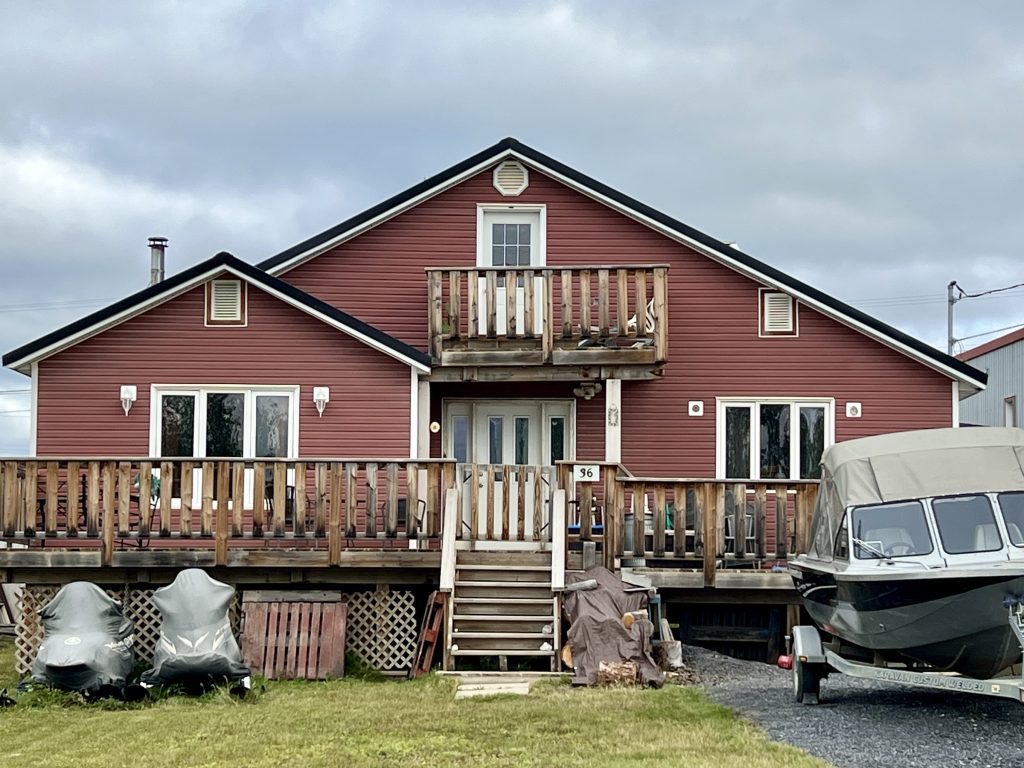
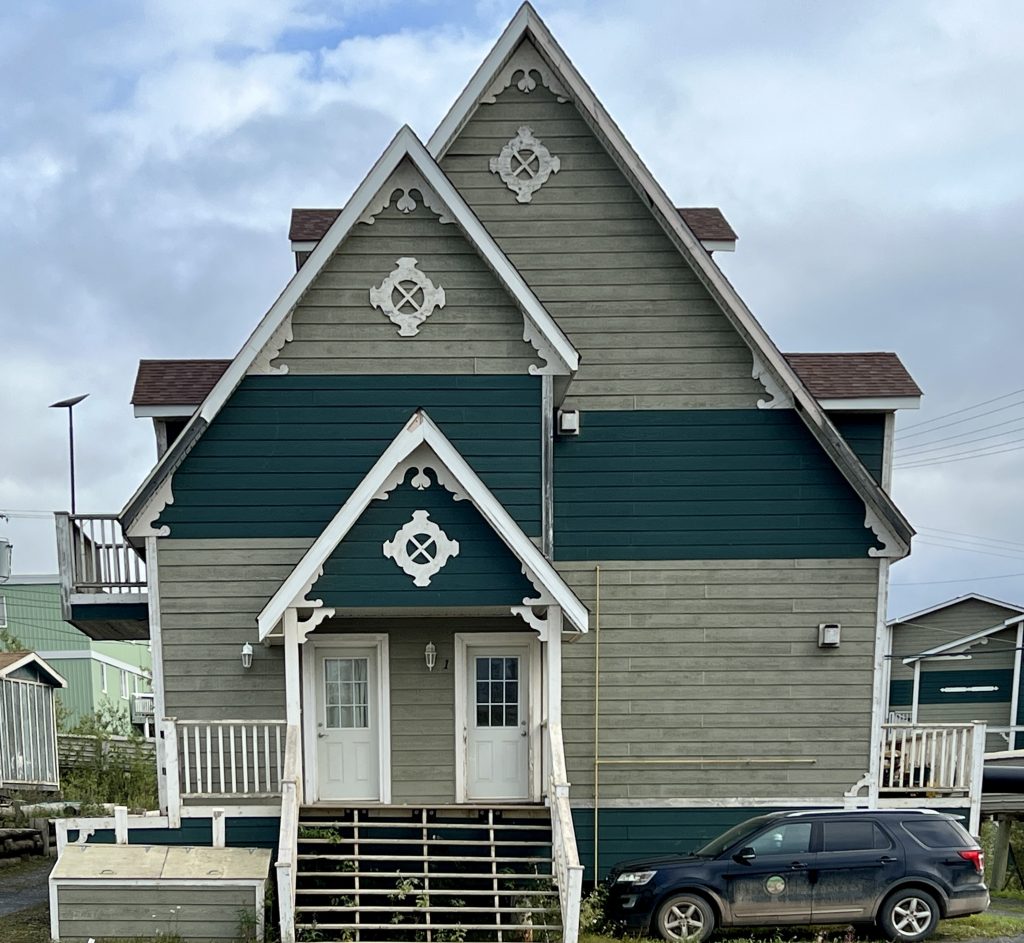
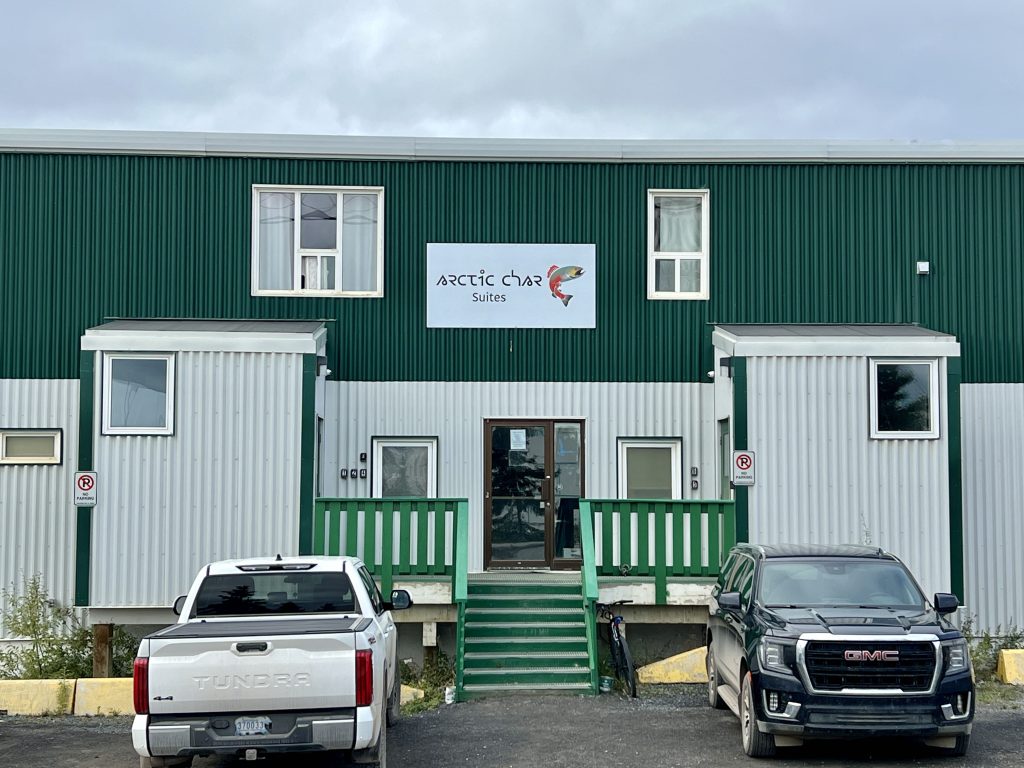
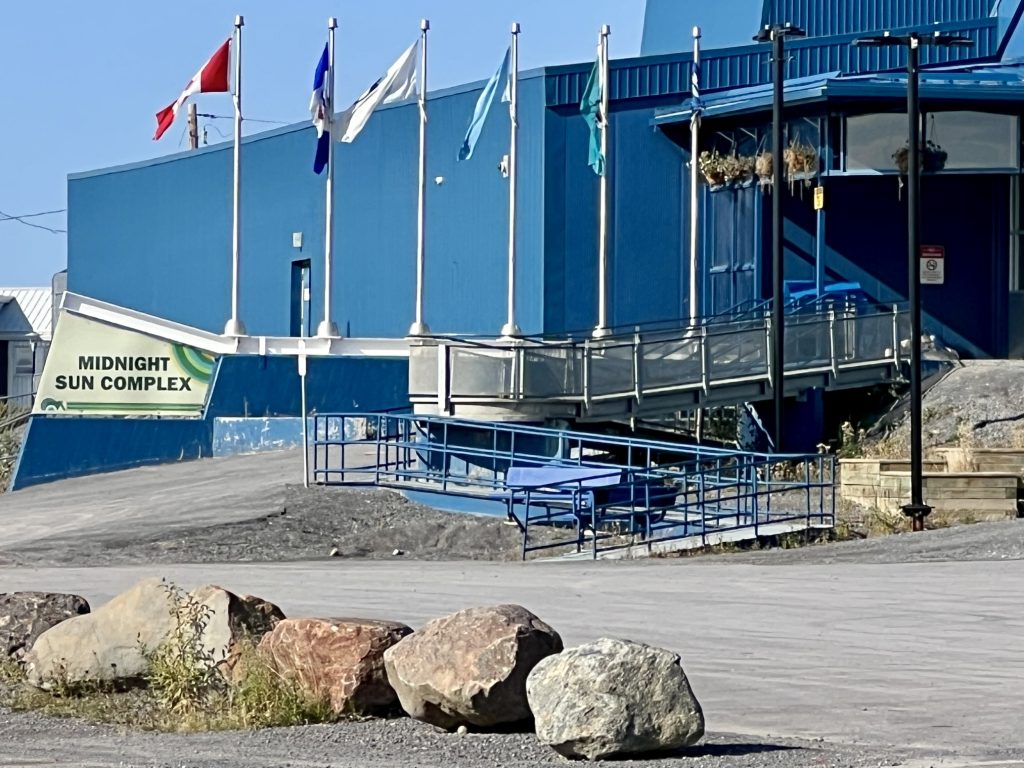
There was a broad collection of other types of buildings as pictured here.
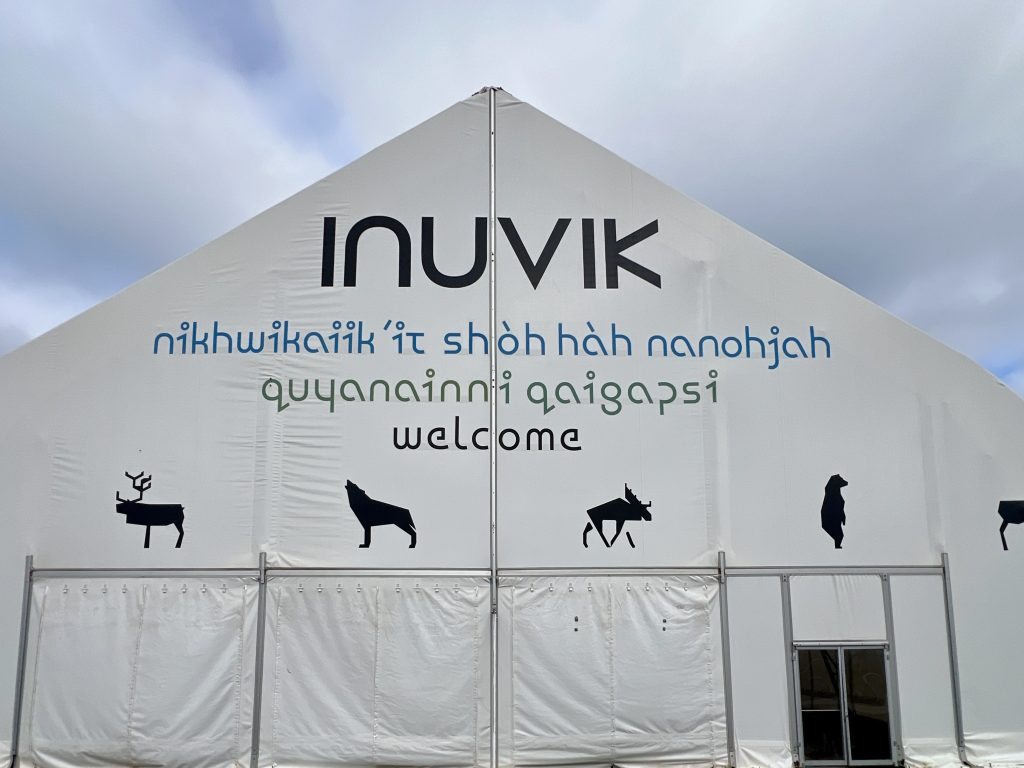
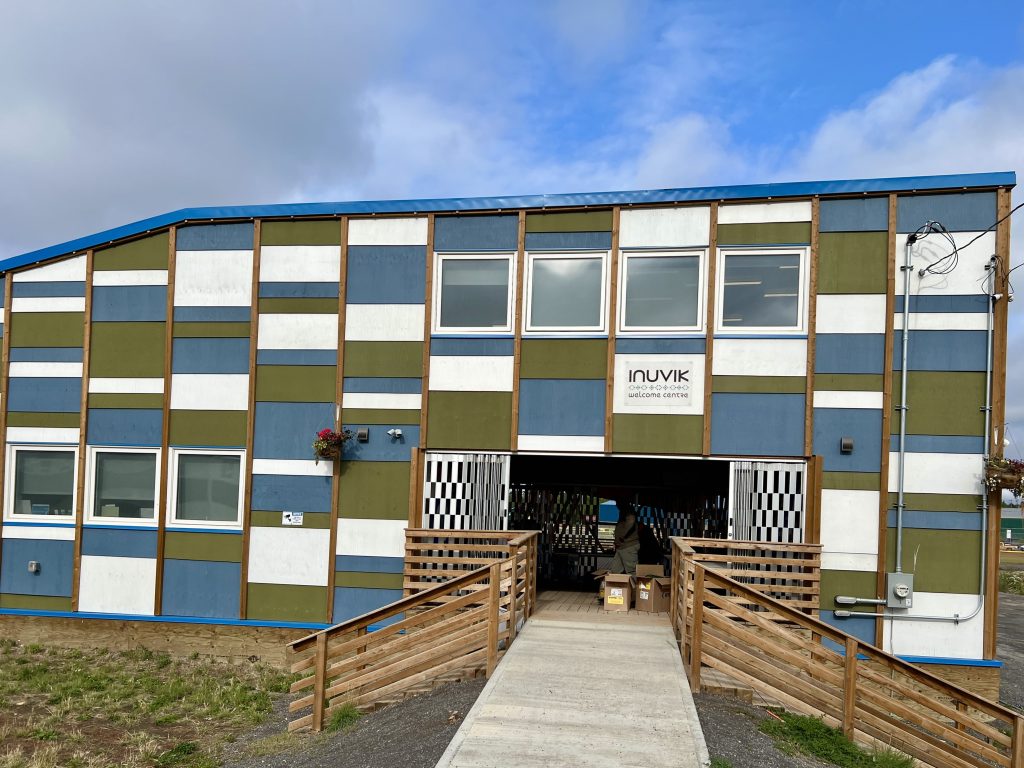
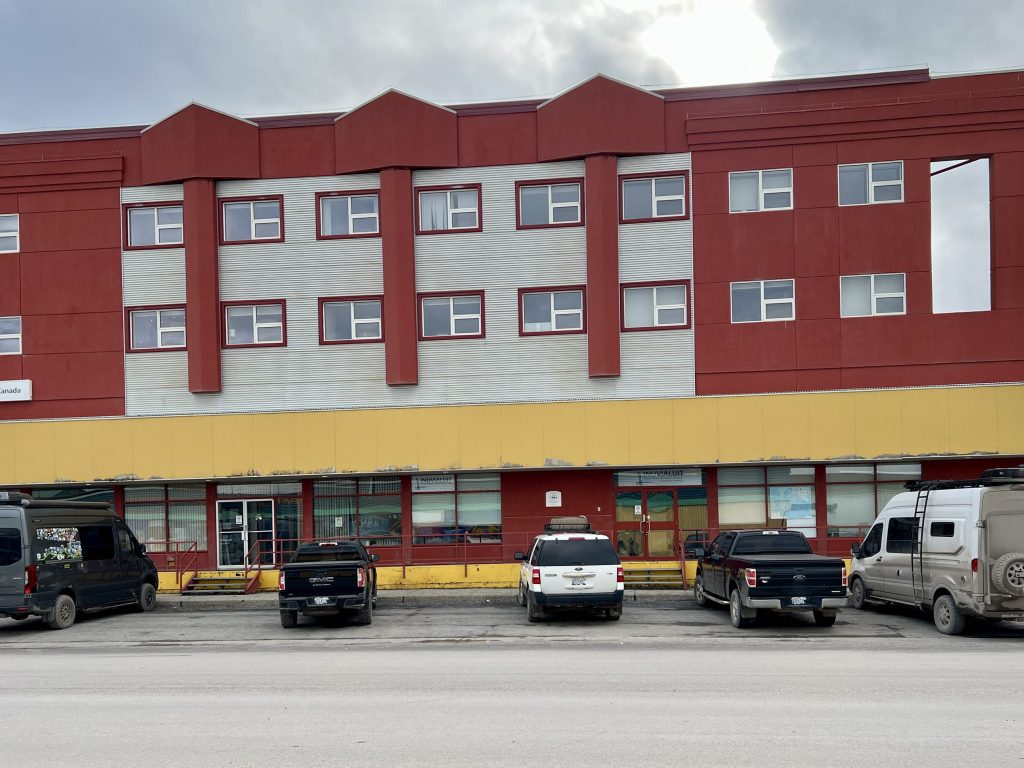
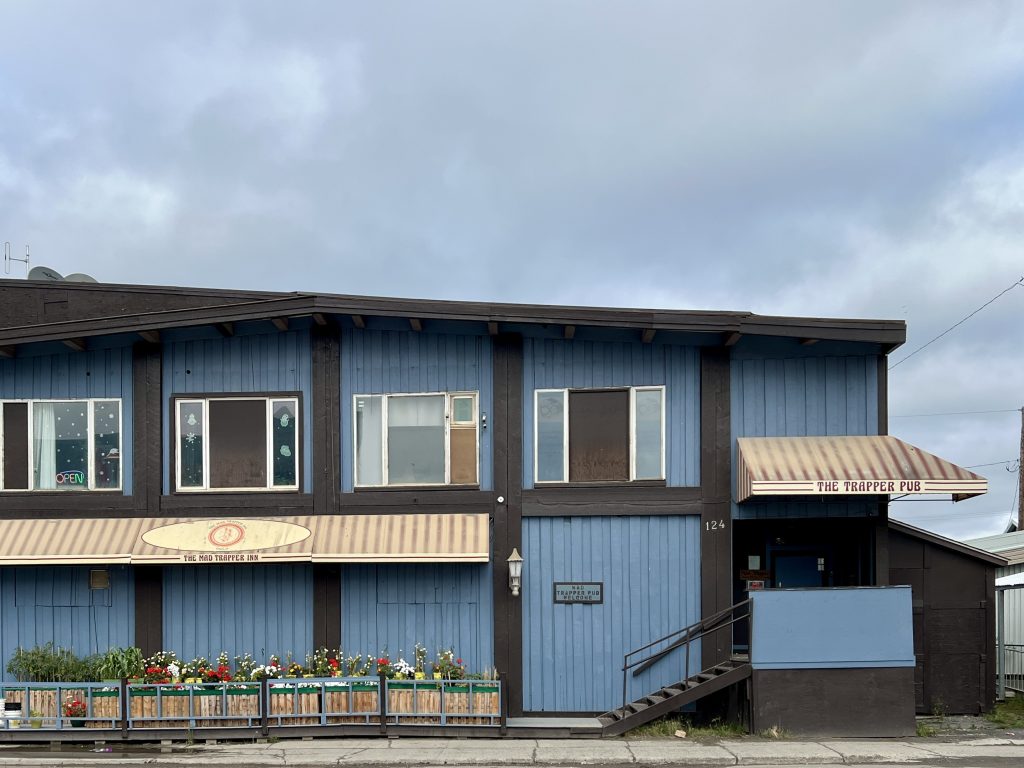
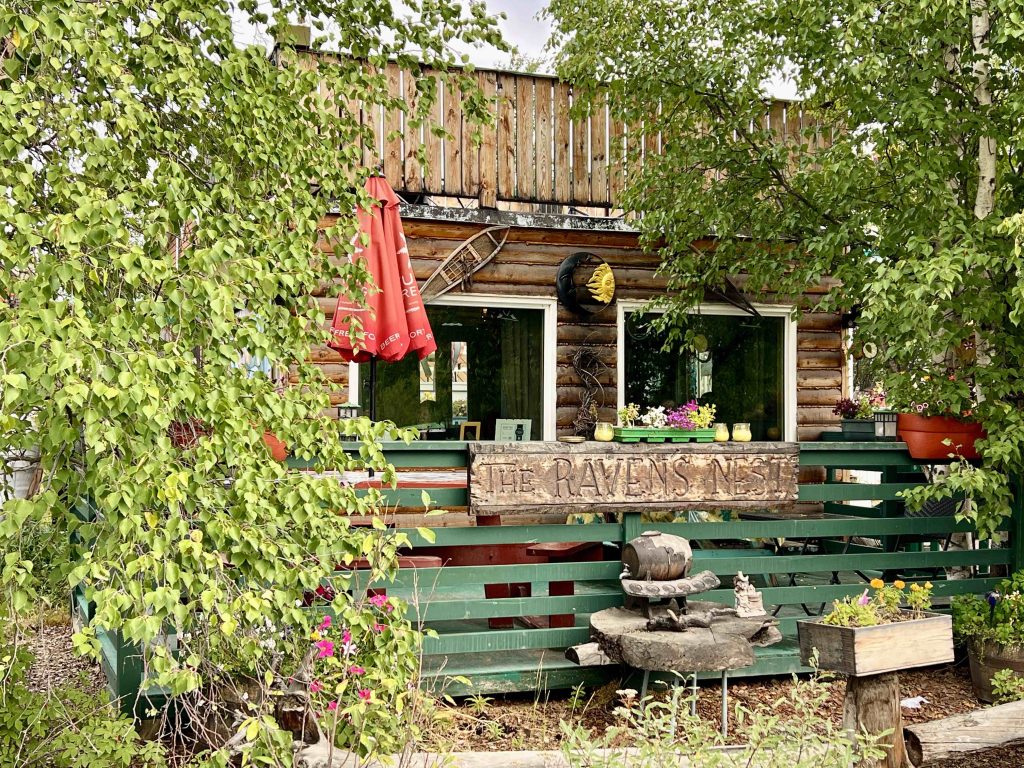
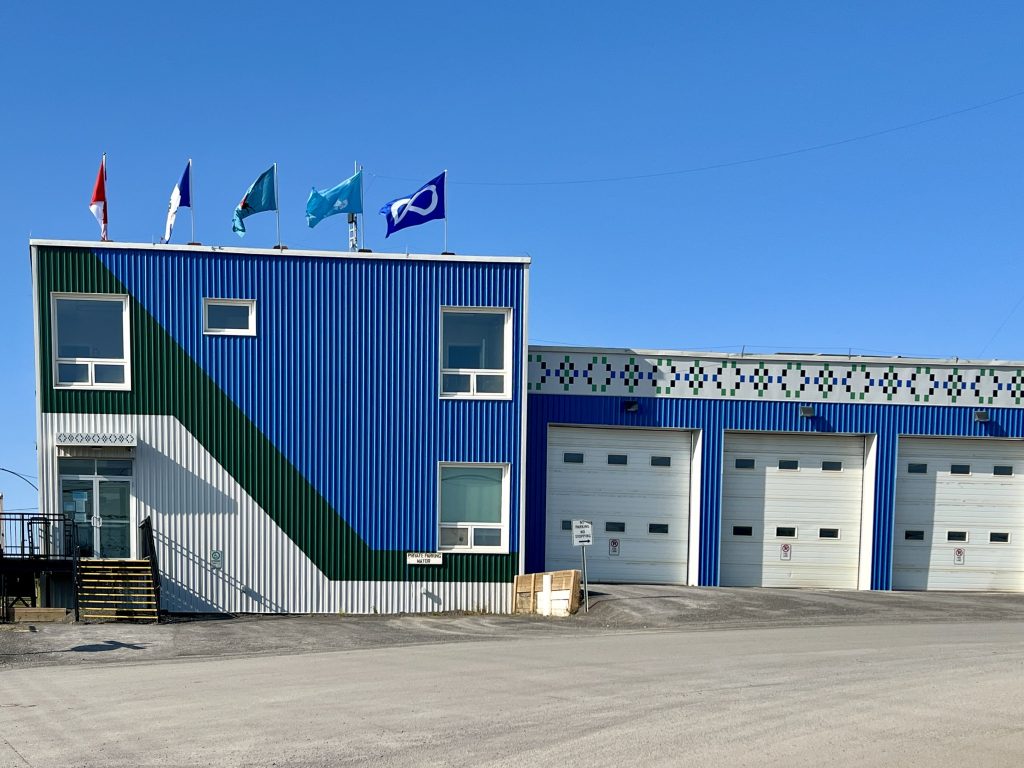
In 1998, Inuvik’s hockey rink, Grollier Hall Arena, was slated to be demolished. A group of interested citizens proposed, fought for, and succeeded in saving the building for use as a community garden center. With financial help from federal, regional, and local governments; the Inuvik Community Greenhouse opened in 1999 and a year after harvested its first yield. Twenty-five years later the facility remained privately and commercially prosperous and maintained a waiting list for residents desiring one or more of the raised beds. Their hydroponics initiative was started some years ago at a cost of $30,000 but never operated properly. However, recent investment, upgraded technology, and renewed interest could bring in the near future a year-round harvest estimated at 50 pounds of leafy vegetables and herbs each month. The Community Greenhouse Society was also seeking funding for an aeroponic facility to produce heartier crops, such as, beans, potatoes, and peas.
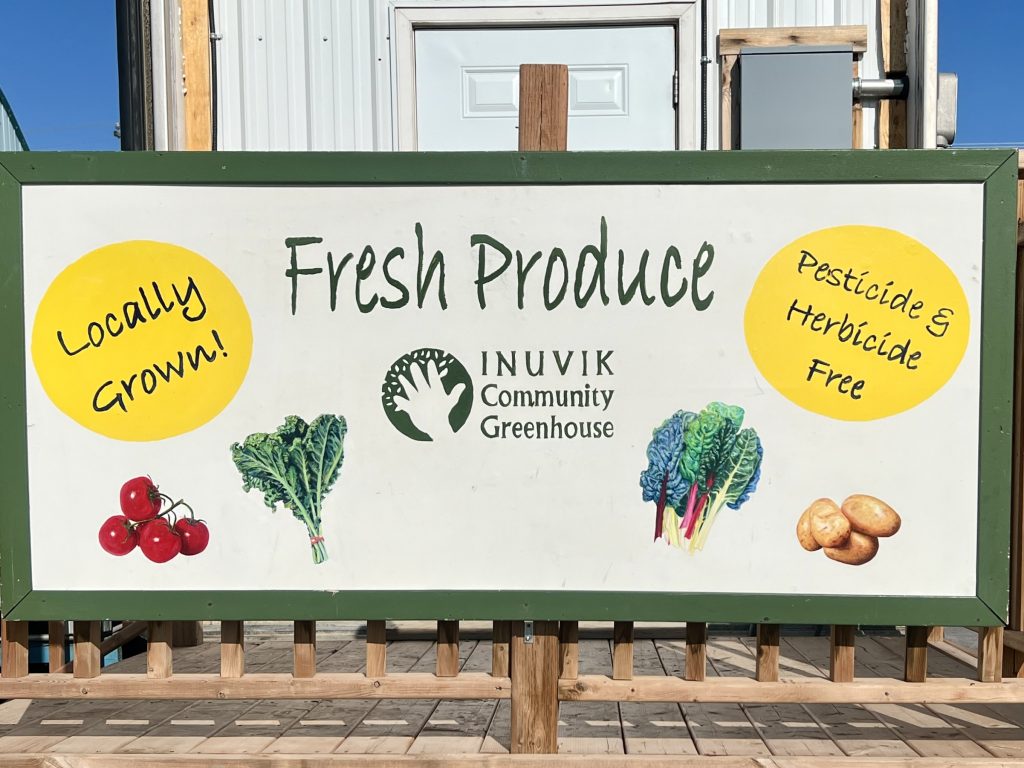
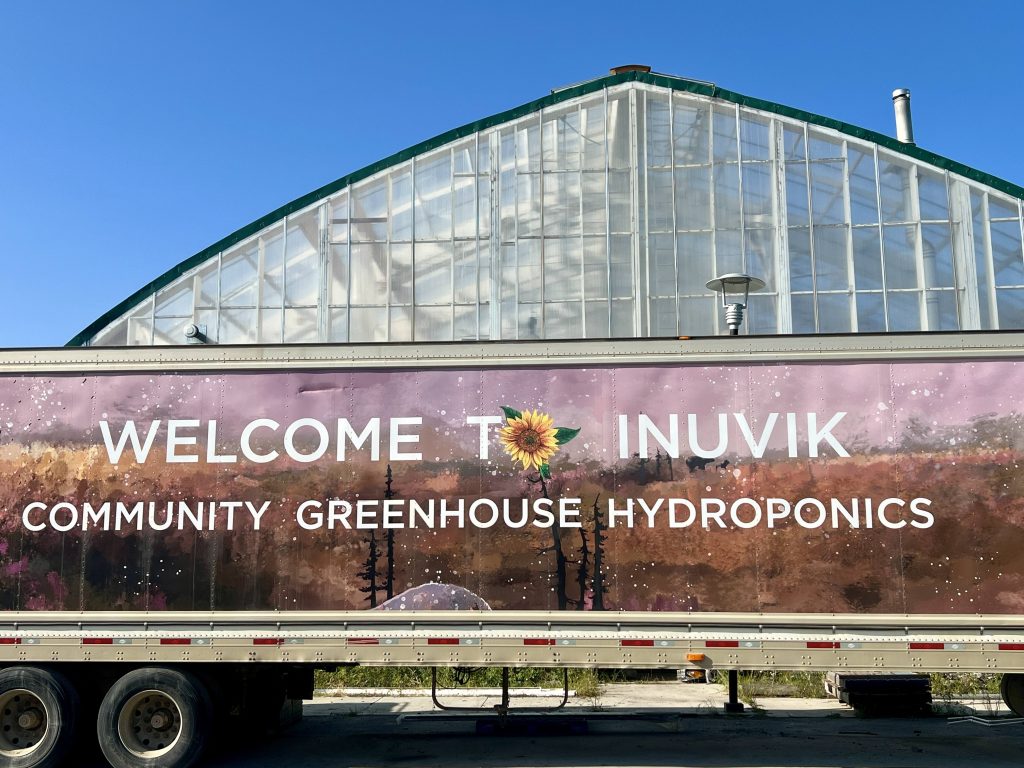
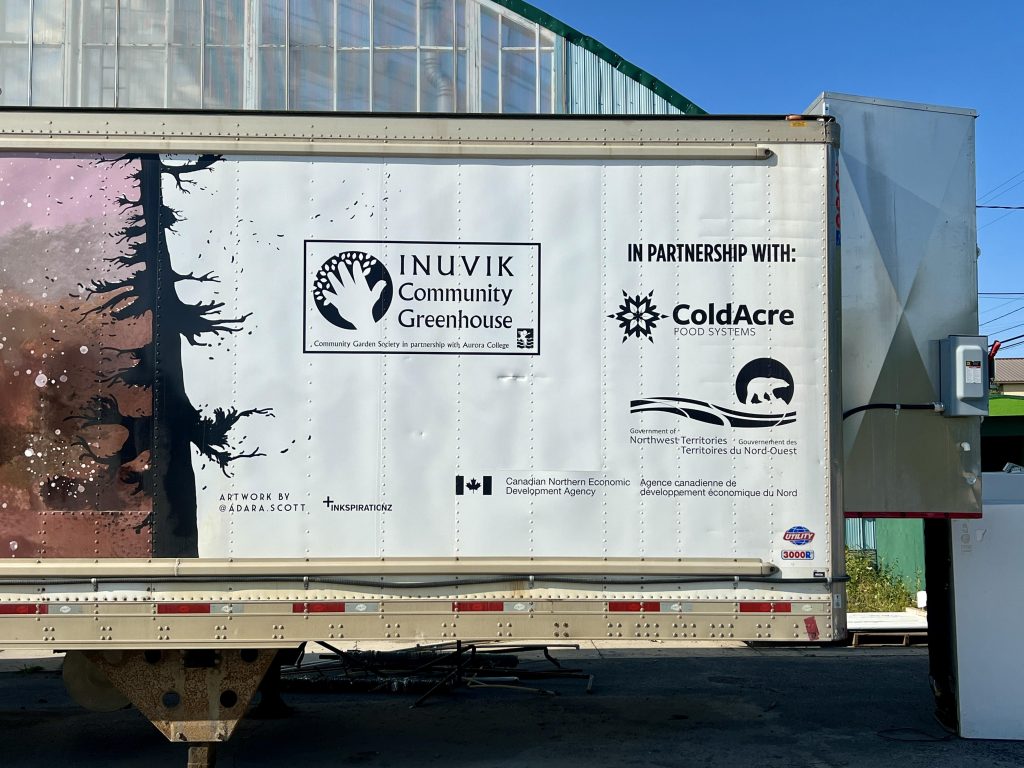
During our delightful private dinner with Arlene at her home, I mentioned hiking past the greenhouse building, and she asked if we’d like a tour? We should have known, that as a prominent Inuvik mover and shake for the better part of five decades, she would also be administratively connected with the facility. We wholeheartedly accepted her kind offer.
The greenhouse provided 16,000 SF of garden space, divided into 88 raised beds sized at 4′ X 16′ or 4′ X 8′ and rented for $25/week or $15/week, respectively. Originally, these same plots rented for $50/year or $25/year. The greenhouse growing season ran from mid-May to early September and included a 56-day period of 24/7 sunshine. As a result of the increase in daily sunshine, fruits and vegetables were ready for harvest one week to 10 days earlier than normal. In 2023, gardeners planted the first mature fruit-bearing trees, such as the one pictured below, and clearly they were producing apples. The fruits and vegetables went to local grocers, food banks, and private consumption. Arlene bragged about how the greenhouse produced and sold all the flowers used in the decorative baskets hanging along the main streets. The Greenhouse Society made $35,000 from the flowers.
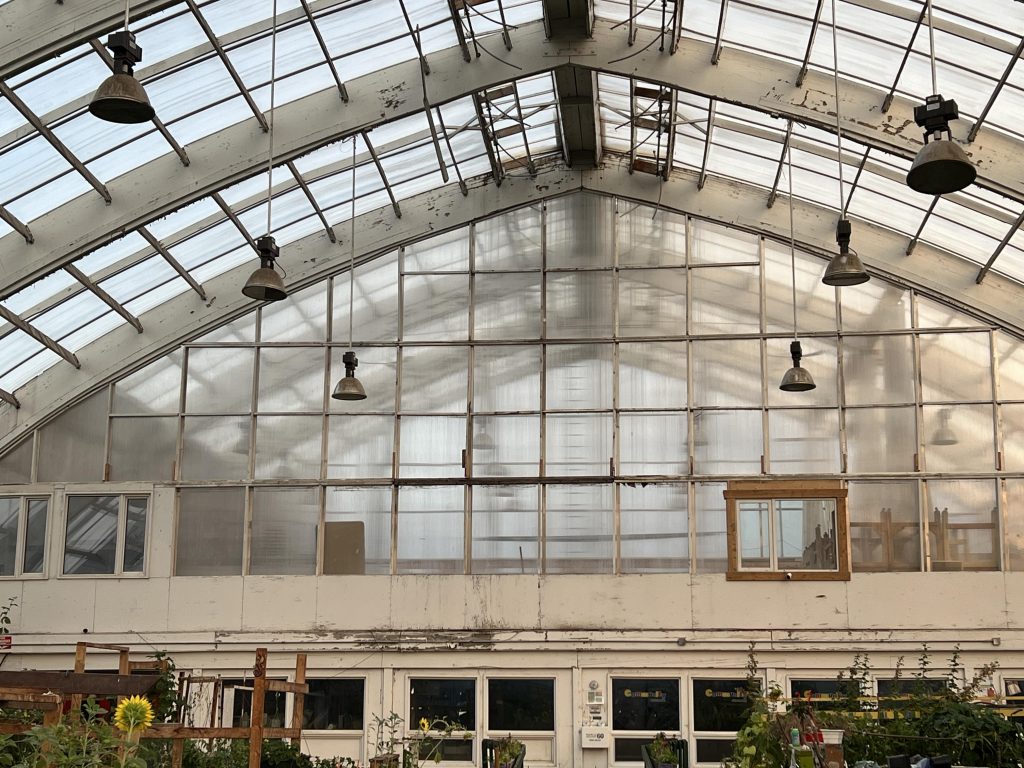
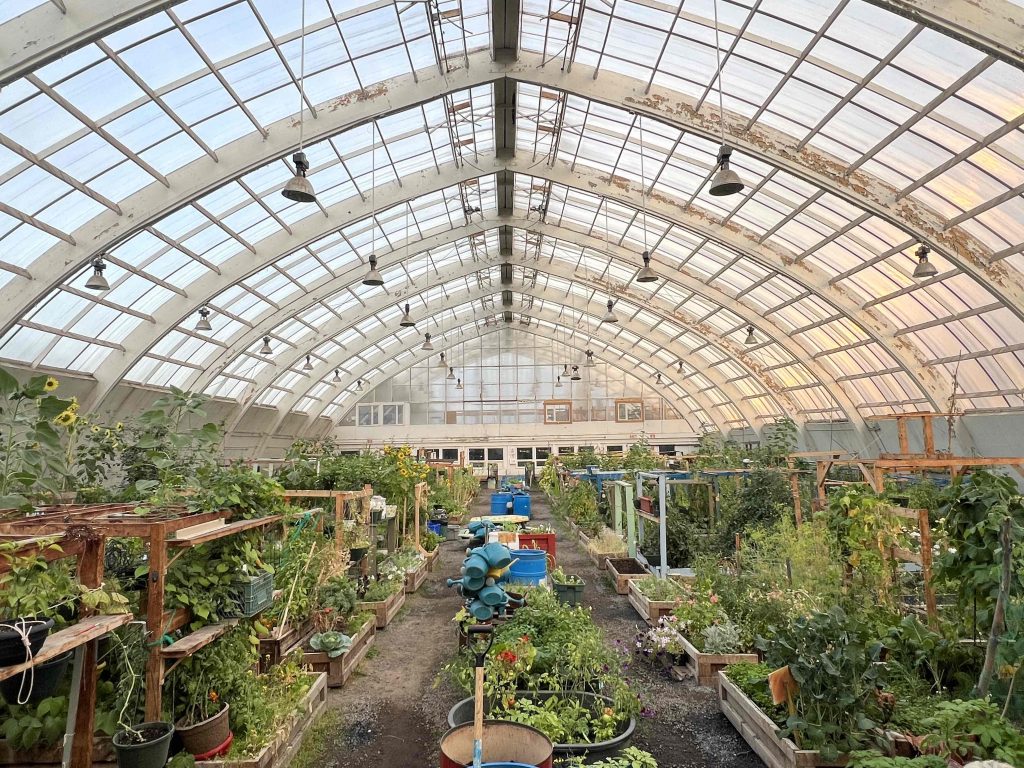
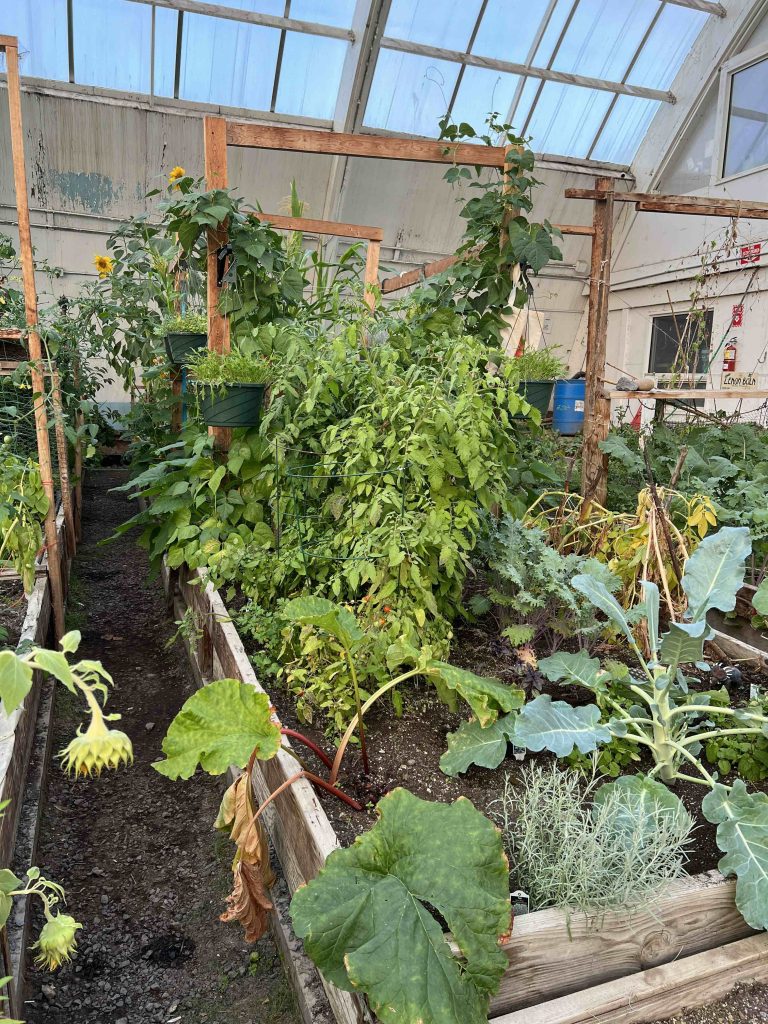
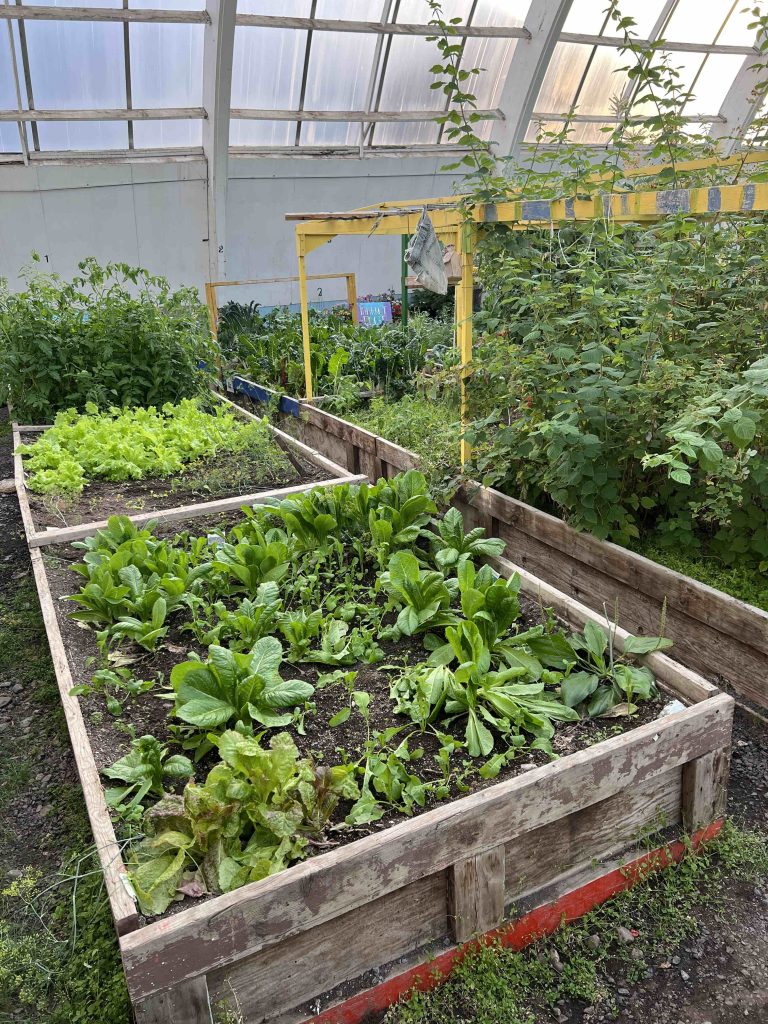
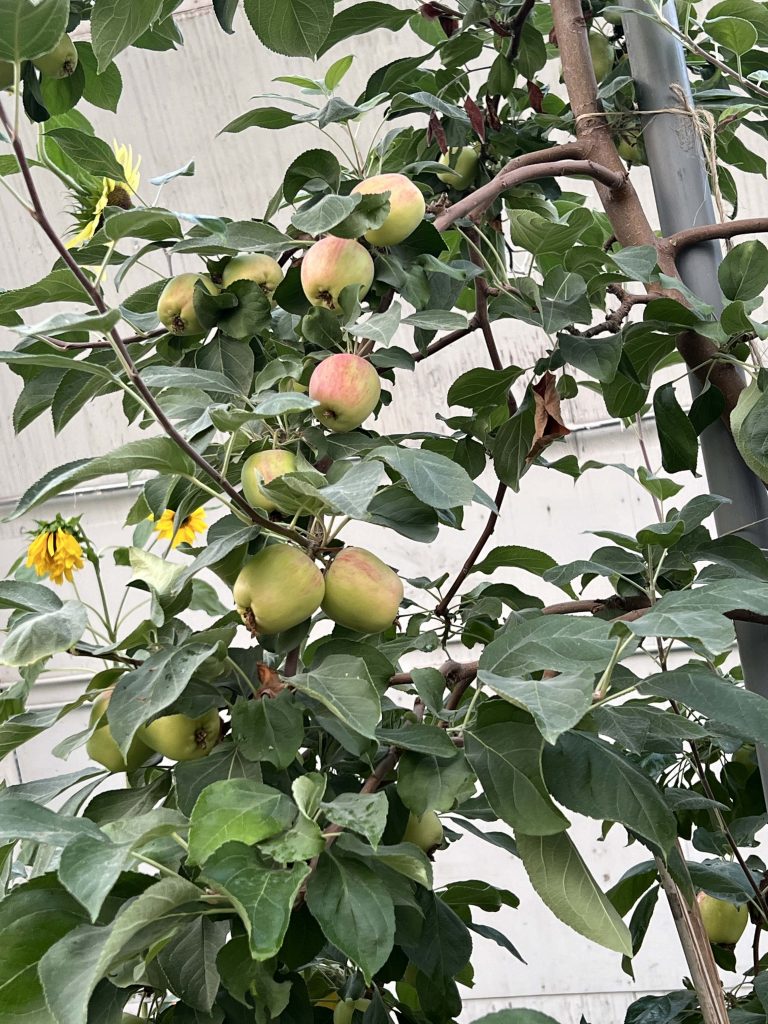
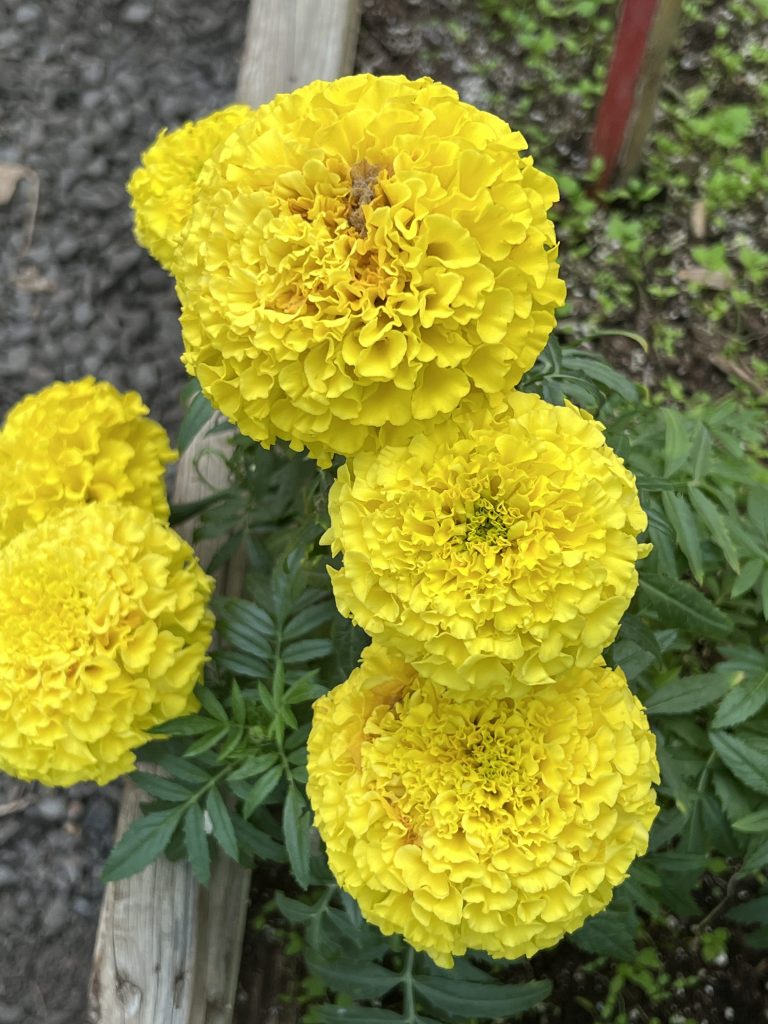
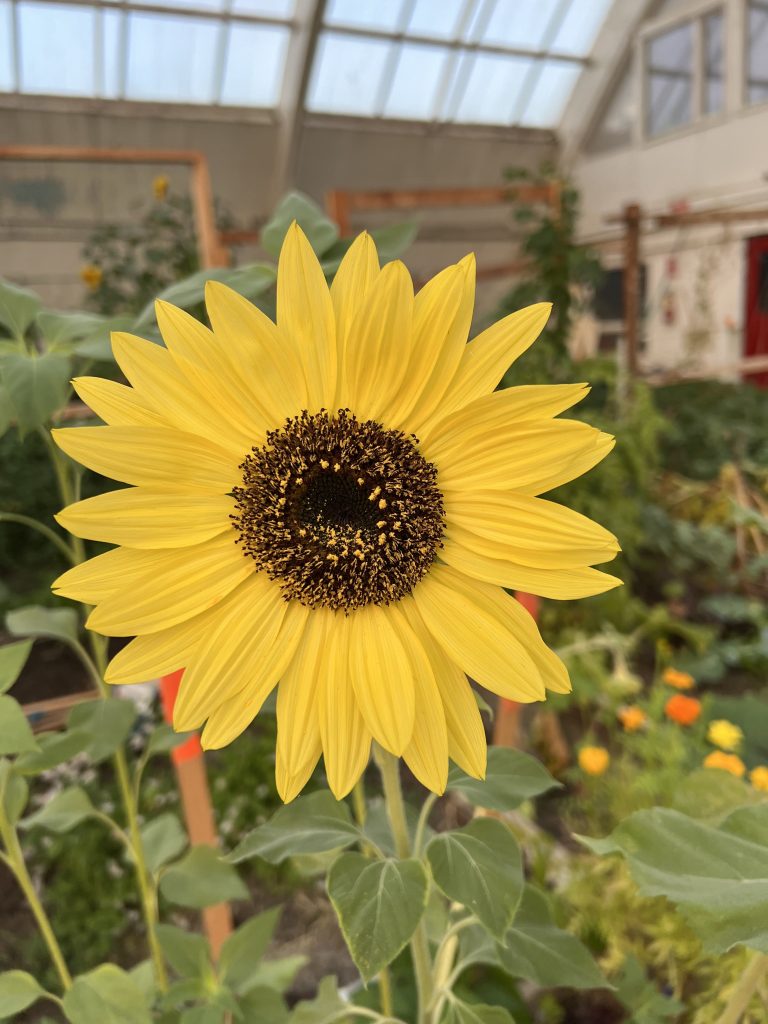
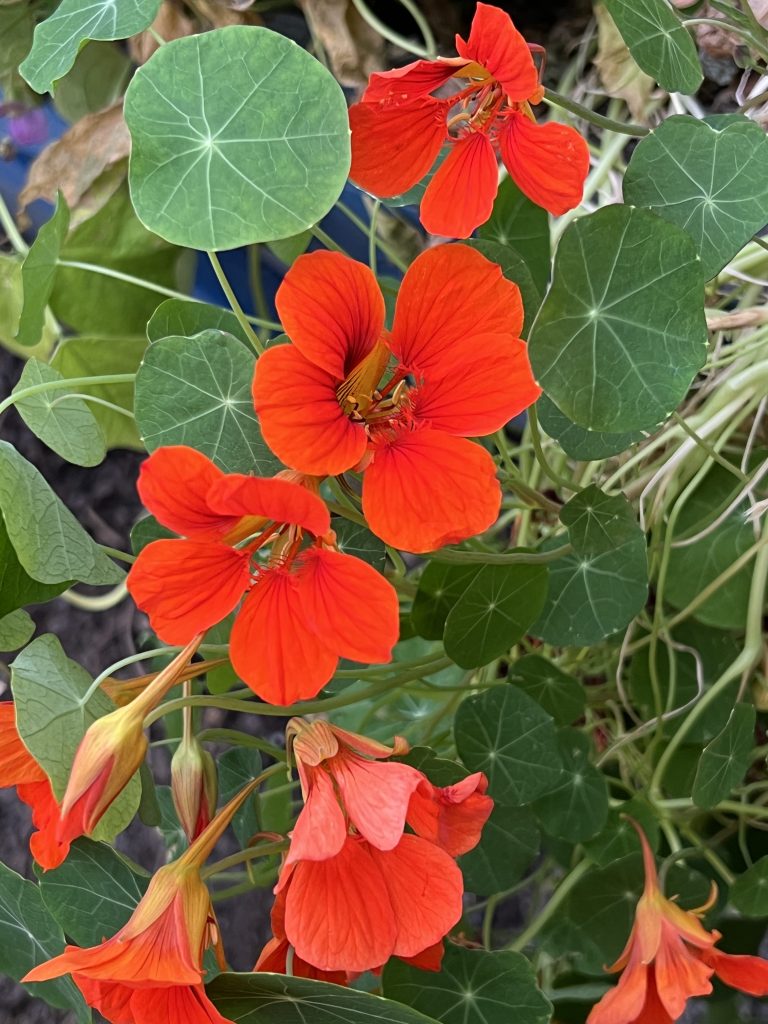
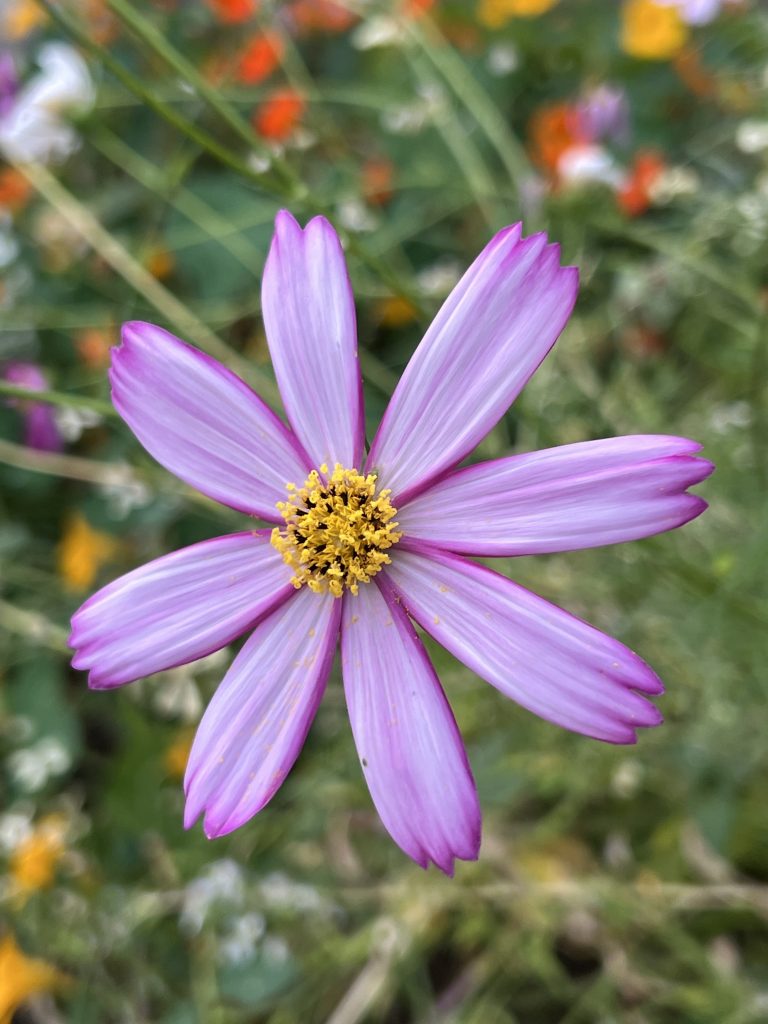
Even though we were there at the end of the harvest season, the beds were filled with late harvest vegetables and a significant number and variety of blooming flowers. Always a sucker for pretty flowers, I took a lot of pictures.
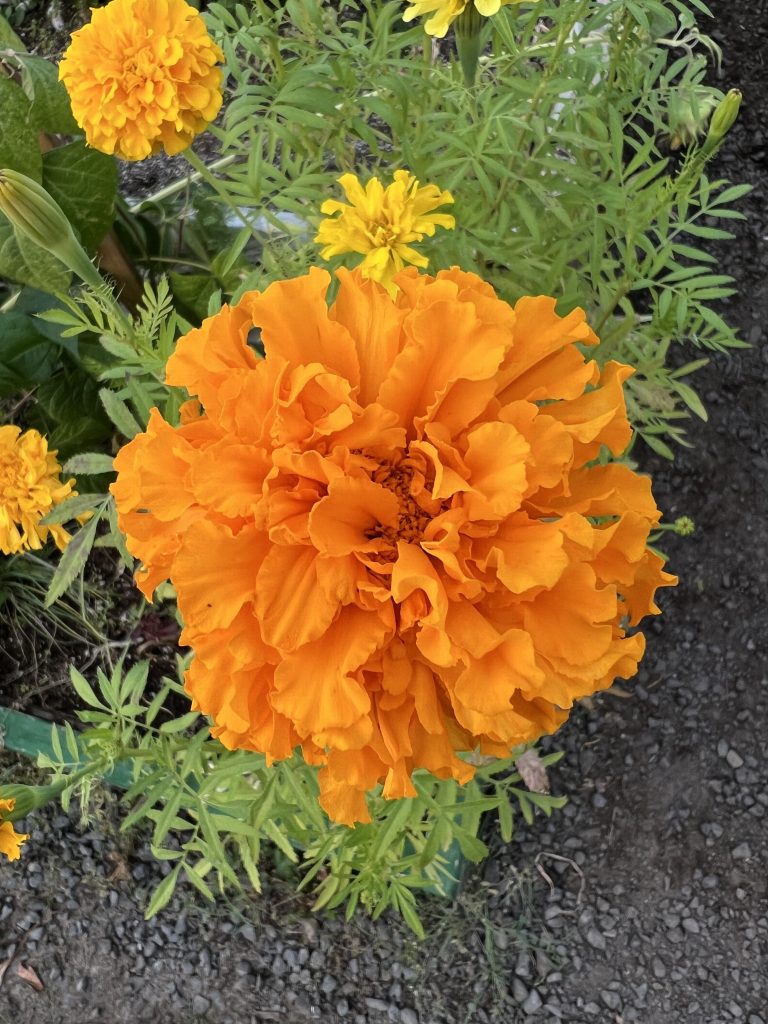
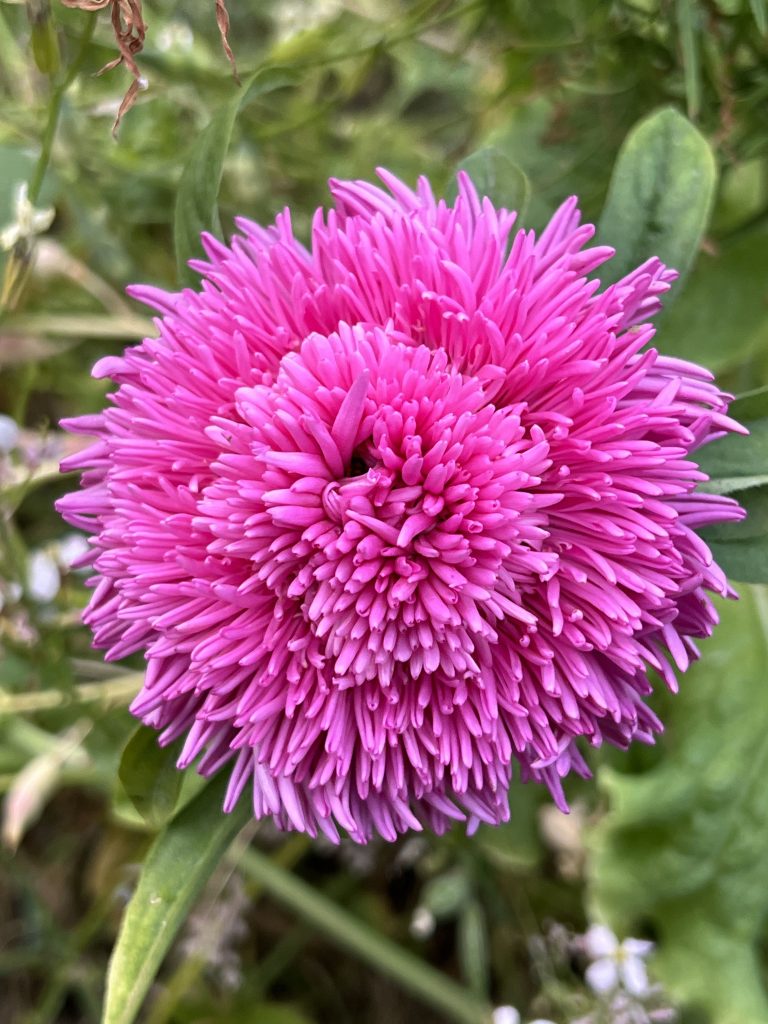
Despite Inuvik’s small population, the town had everything a community needed to support the lives of its residents. It was easy to see how people, such as Arlene, and families could spend happy and fulfilling lives there despite the remote location and unforgiving conditions. Impressive people have created an impressive place!